Just Like Me
The Thing I Cant Explain
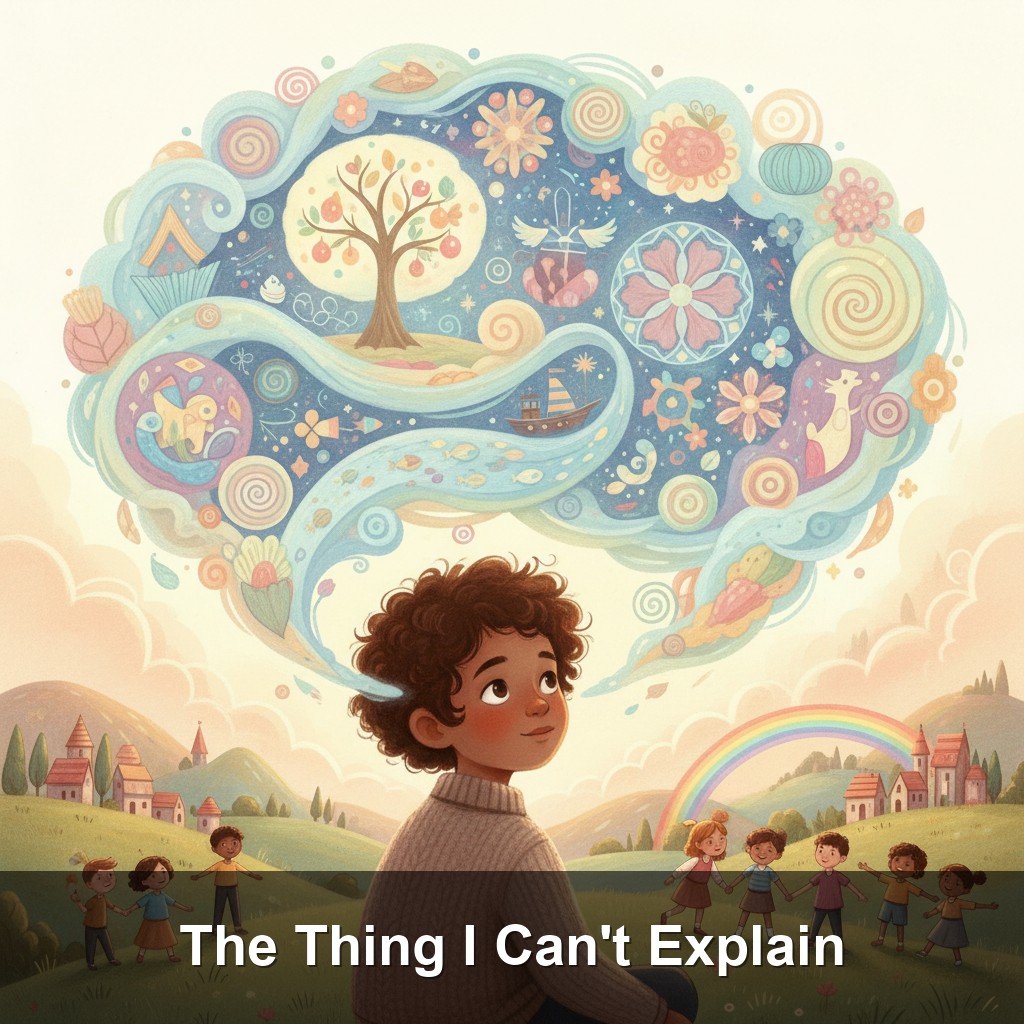
Sam's room was quiet. The good kind of quiet. The kind where the clock doesn't tick too loud and the street sounds stay outside where they belong.
Parent knocked soft on the door. "Sam? Can I come in?"
"Yes," Sam said, because it was true.
Parent sat on the edge of Sam's bed. They didn't say anything right away. That was one of the good things about Parent. They knew when to just be there.
"I've been thinking," Parent said, "about what you told me yesterday. About the party."
Sam nodded. The party had been too much. There had been balloons—red ones, and the red ones made a sound when they rubbed together that felt like sandpaper on Sam's teeth. There had been music with a beat that thumped right through Sam's chest like a second heart, and a child had been crying somewhere, and someone had popped a balloon and Sam had covered ears and closed eyes and—
"I need a minute," Sam had said. And Jordan had nodded and Parent had come and they had left. That was the plan. That was the thing that worked.
"I want to understand," Parent said. "I want to know what it feels like. What it's like inside. Can you tell me?"
Sam looked at Parent. Parent's face was doing a thing. The caring thing. The listening thing. Sam knew this face.
"It's hard to explain," Sam said.
"That's okay. Try. I'll listen."
Sam thought. How do you explain a feeling that has no words? Sam is good with words. Sam knows everything about deep sea creatures and could tell you about the anglerfish and its glowing lure and the pressure down where the light doesn't reach. But this was different. This was the thing inside that Sam had never had to say out loud before.
"It's like..." Sam started. "It's like all the sounds are wearing boots. And they're walking on my brain."
Parent blinked. "All the sounds?"
"All of them at once. The clock. The lights. The lights have a sound too, did you know that? It's like humming but you can't hear it with ears. You hear it with your skin."
Parent's eyes got wide. Not the bad kind of wide. The interested kind. "You hear lights with your skin?"
"Feel them," Sam corrected. "It's like a vibration. The lights at the party were very loud. On my skin."
Parent sat with that for a moment. "Okay," Parent said slowly. "And the loud things—the music, the balloons—what do those feel like?"
Sam thought about the balloons. The red ones. That rubbing sound. "Like sandpaper on my teeth," Sam said. "Except my teeth are my whole body."
"Your whole body is teeth," Parent repeated. They said it gently. Like they were trying it on to see if it fit.
"That's not all," Sam said. Something was opening up now. The words were coming. "It's like there's no filter. You know when you pour pasta through a strainer and the water goes through but the pasta stays?"
"Of course."
"Most people have a strainer. For sounds and lights and feelings. The sounds go through the holes and only the important ones stay. But I don't have a strainer. Or my strainer has no holes. Everything stays. Everything is in the pot. The bad sounds and the good sounds and the ones that don't matter and the lights and the tags on my shirt—I can feel the tag right now even though I've worn this shirt a hundred times—and it's all there and it's all loud and it's all now."
Sam stopped. Sam was breathing hard. That had been a lot of words. That had been the most words about this thing Sam had ever said.
Parent was quiet. Parent's hand was on the bed next to Sam's hand. Not touching. Just there. Waiting.
"That sounds exhausting," Parent said.
"It is," Sam said. "That's what I couldn't explain before. It's not just loud. It's heavy. All the things I notice—all the details that other people miss—they're not free. They cost energy. Every sound, every light, every tag on every shirt. I notice everything and it takes work to notice everything. And when there's too much..." Sam trailed off.
"What happens?" Parent's voice was very gentle. "When there's too much?"
"It's like the radio in my head has all the stations playing at once. And I can't find the dial. And I can't turn it off. And I just want it to stop. And I can't say 'I need a minute' because the words are gone, and everyone wants things from me, and the lights are wearing boots, and my skin is teeth, and—"
Sam stopped. There were tears on Sam's face. Sam hadn't noticed them starting. That happened sometimes. The body did things before the brain could catch up.
Parent's hand moved closer. Still not touching. "Can I give you a hug?" Parent asked. "Or would you rather I just be here?"
Sam thought. The question felt good. Parent had asked. Parent always asked now. "Just be here," Sam said.
"Okay." Parent stayed. Parent was the quiet. The good kind of quiet.
After a while, Sam's breathing got slower. The tears dried. The radio in Sam's head turned down, station by station.
"What does peace feel like?" Parent asked. "The good times. What do those feel like?"
Sam thought about that. The good times. The deep sea creatures book with the pages that made a soft sound when turned. The pattern of tiles in the kitchen floor—Sam knew them all, every crack and curve. The way Parent hummed when making breakfast. The hum was low and warm and it didn't wear boots.
"Peace feels like underwater," Sam said. "Not the drowning kind. The kind where you're floating and the whole world is muffled and soft and nothing is sharp."
"That sounds nice."
"It is. That's where I want to be more of the time."
Parent nodded. "What helps you get there?"
"Quiet. My book about the anglerfish. Jordan knowing I need a minute. You asking if I want a hug instead of just doing it."
Parent smiled. The good kind of smile. "I want to write those down," Parent said. "So I remember."
"Okay," Sam said. And then, because it was true, because Sam had found the words, Sam said: "Thank you for asking. Most people don't want to know."
"I always want to know," Parent said. "You're not a mystery to solve, Sam. You're a person to understand. And understanding takes time and questions and being willing to say 'I don't know yet.'"
"Most people don't say that," Sam said.
"I want to be like you," Parent said. "I want to notice things. The things you notice. The patterns. The sounds. The way lights feel."
Sam considered this. Parent wanted to understand. Parent was trying. It was a lot. It was enough.
"Maybe we could make a list," Sam said. "Of the things that help. So both of us know."
Parent's face did the good thing again. "I'd like that very much."
Sam got the paper. The blue paper with the smooth texture. Sam's favorite paper. The list started:
Things That Help Sam:
-
Quiet places
-
Asking before hugging
-
Saying "I need a minute"
-
The anglerfish book
-
When you just sit with me without needing words
-
Understanding
Sam looked at the list. "I think I want to put 'Being able to explain it' sometimes," Sam said. "Because that helps too. When I can say the thing out loud and someone hears it and doesn't try to fix it."
Parent touched the paper. Lightly. "You did that today," Parent said.
"I know," Sam said. And Sam smiled, because the radio was quiet now, and the lights were soft, and the words had worked.
A Note for Grown-Ups:
This book is about the experience of trying to articulate what life feels like from the inside — the sensory overload, the weight of noticing too much, and the profound peace of being understood. Many neurodivergent children struggle to find words for experiences that feel invisible. When a child talks about what their inner world is like, listen without fixing. Let them use metaphors — teeth for skin, radios in the brain, underwater peace. These images are bridges. Meet them halfway.