Ember's Way
The Ice Dragon
Ember was lying on his back in the meadow, watching clouds bump into each other. It was the first truly hot day of summer. The River Char was low and slow. The dragonflies were too sleepy to zoom.
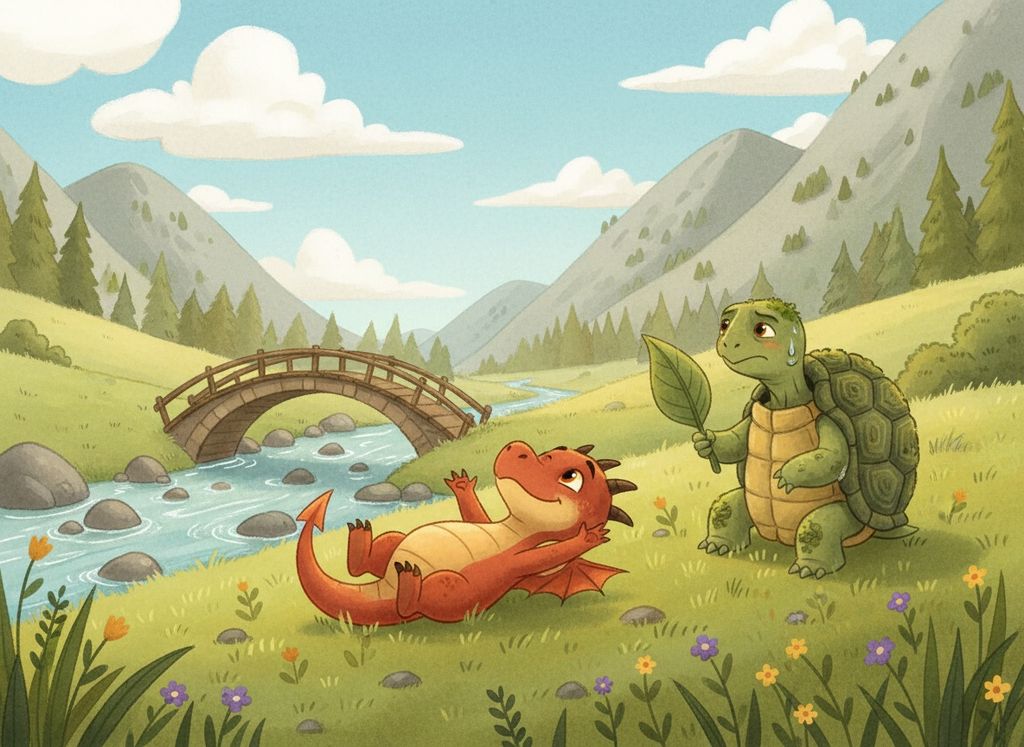
“I am melting,” said Thistle, who was not melting. She was sitting in the shade of Ember’s wing, looking cross about the heat.
“It is very warm,” Ember agreed. His nose twitched. He hoped it wouldn’t do the sideways-fire-sneeze thing. Not in this heat.
Then the air went cold.
It was not a cloud passing over the sun. It was a different kind of cold, a winter cold, the kind that makes your scales go tight and your breath come out in little puffs.
Ember sat up. A dragon was landing in the meadow.
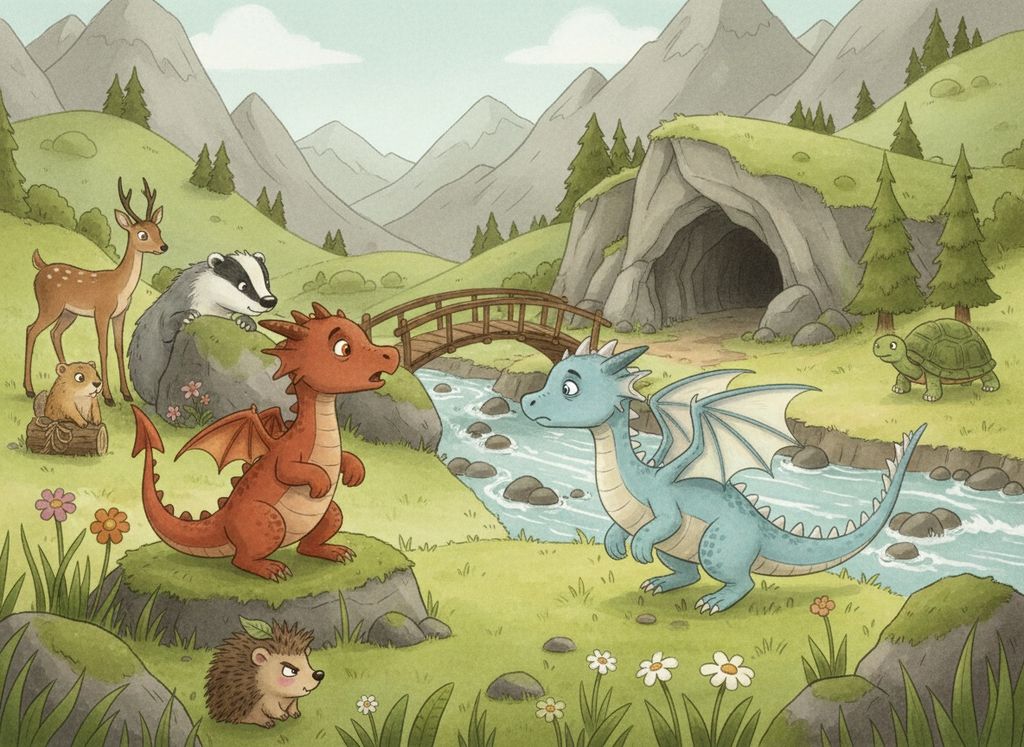
This dragon was not rust-red like Ember. It was pale blue, like the inside of a frozen puddle, with frosty white spikes along its back and wings that shimmered like ice on a morning pond.
“Hello,” said Ember.
The ice dragon did not say hello. It looked at the meadow, then at Ember, and then it looked very embarrassed.
“Um,” said the ice dragon. “I am Frost. And I think I have made a problem.”
“What kind of problem?” asked Thistle.
“The frozen kind,” said Frost.
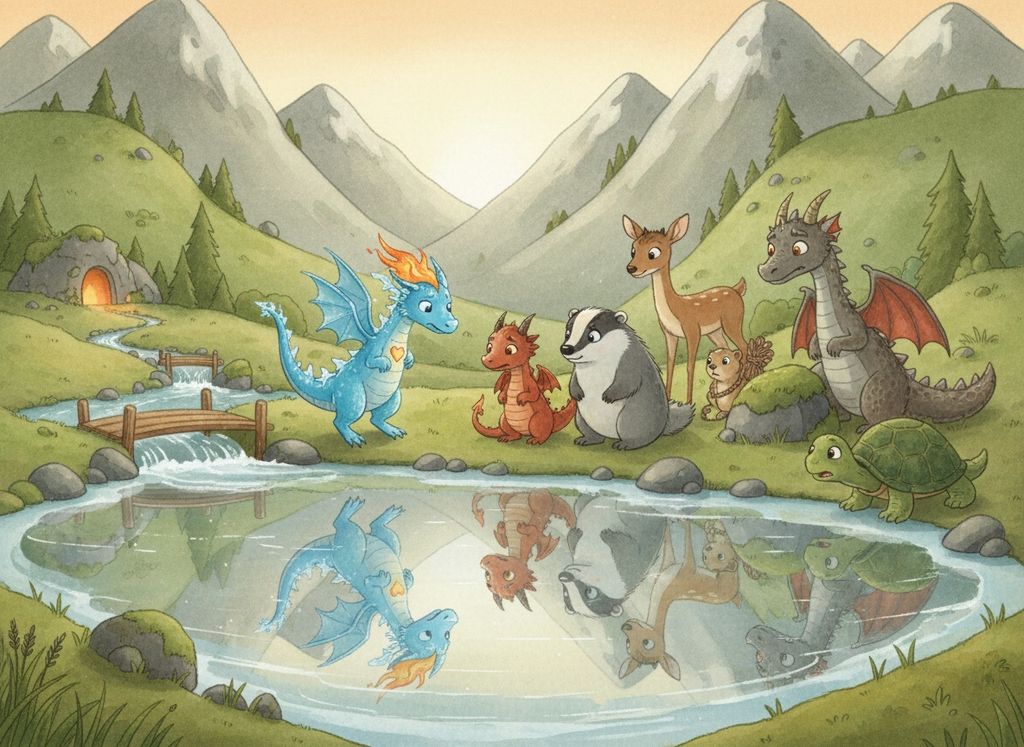
They followed Frost to the edge of the meadow, where a small pond sat between two willows. Ember knew this pond. Spark sometimes used it to cool her tail after a long fire-practice.
It was not a pond anymore.
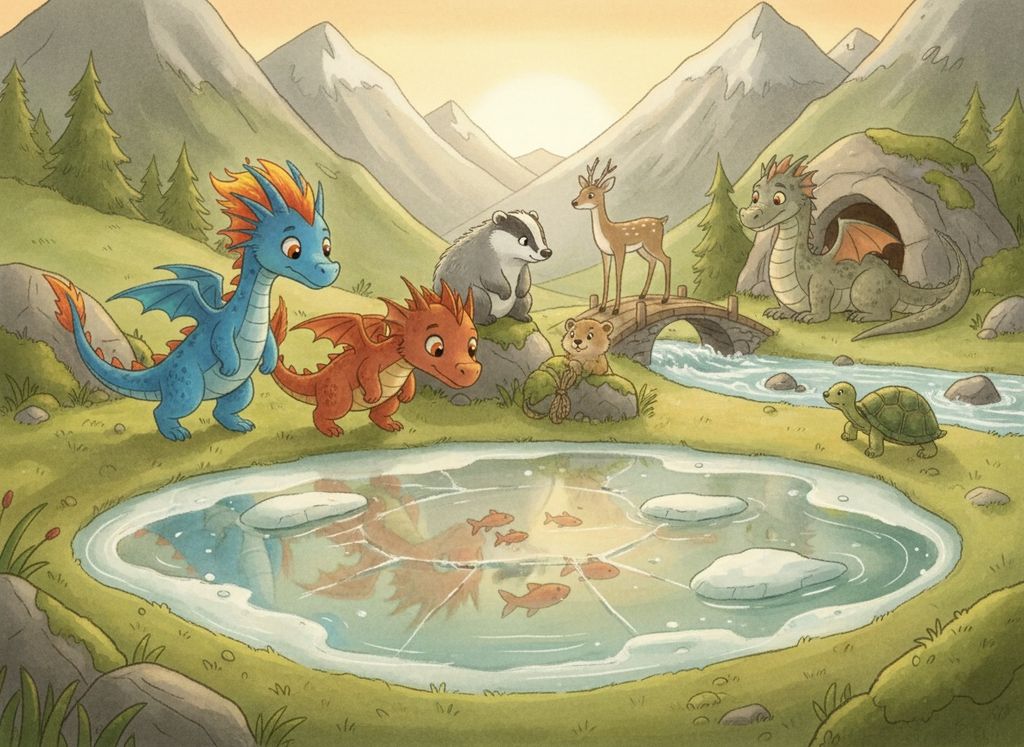
It was a solid, shiny, very cold disk of ice. And inside the ice, perfectly visible, were the pond’s fish. Three of them. Silver and orange. They hung in the frozen water like little jewels.
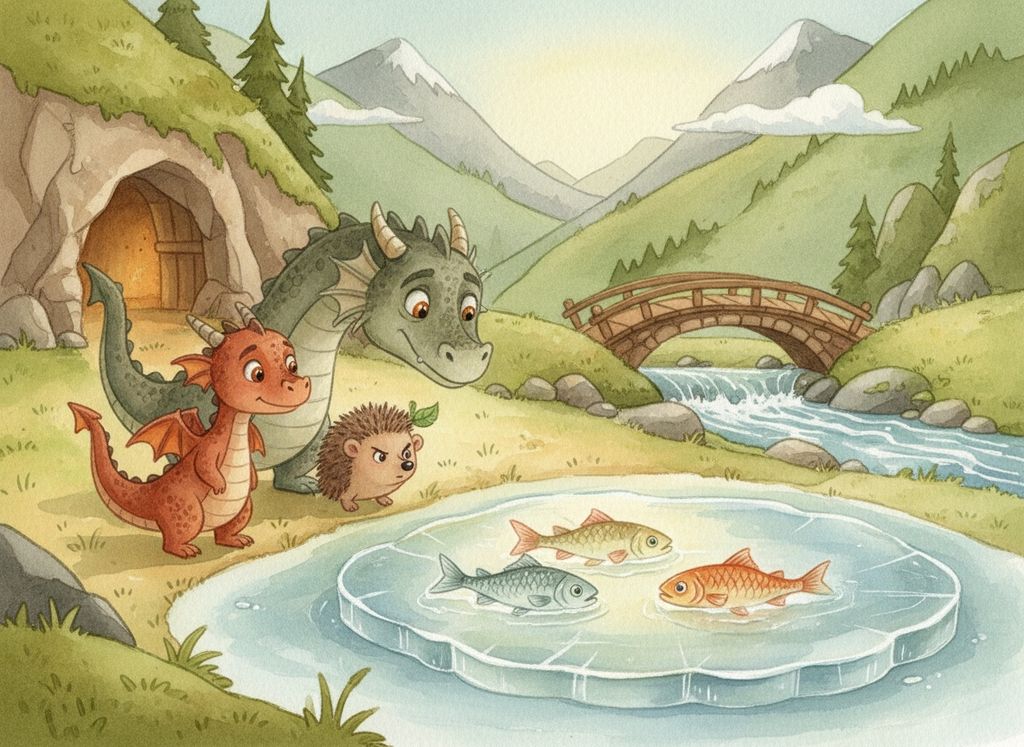
“Oh no,” said Ember.
“I was flying over,” said Frost. “I saw the water sparkling. It looked so nice and cool. So I did what I do. I breathed on it.” Frost hung their head. “I forgot it was summer. I forgot this pond belongs to you. And now the fish are... are... are they dead?”
Ember hurried to the edge of the ice. He pressed his ear to the surface. He listened very hard.
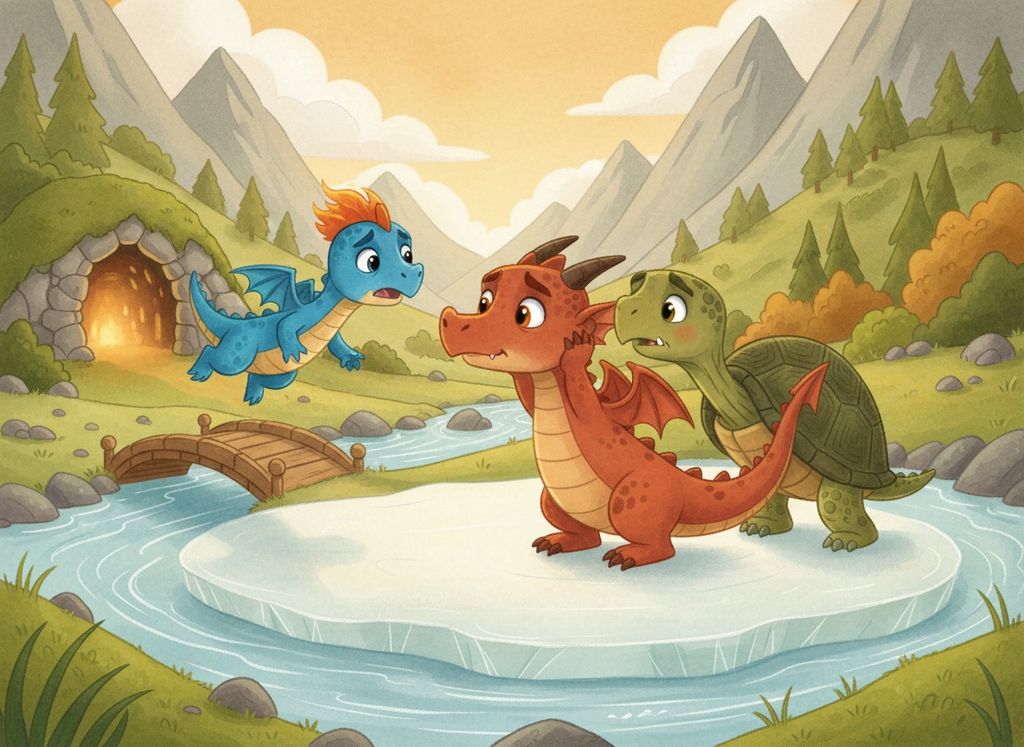
“They are not dead,” he said. “They are just very, very surprised.”
Thistle poked the ice with a claw. It was solid. It was thick. “How fast can you thaw it?” she asked Frost. “If you... what do you do with your fire? Do you have fire?”
“I do not have fire,” said Frost. “I have cold. It is the only thing I have. That is what ice dragons are. We are cold.”
“Right,” said Thistle. “Then this is a problem.”
Ember looked at the pond. He looked at the fish. He looked at the hot summer sun hanging in the sky.
“What if we just wait?” he asked. “The sun will melt it by evening.”
Frost shook their head. “The sun will melt the top of the ice first. The top will get soft. The bottom will stay frozen. The fish will be in the middle, stuck, while the pond grows warm and then cold again. They will not survive the night.”
“Oh,” said Ember. “So we cannot wait.”
“We could break the ice,” said Thistle. “Smash it with a rock.”
“And smash the fish?” said Frost. “No.”
“What about my fire?” said a new voice.
Spark landed beside them, bright and warm. She looked at the pond. She looked at the ice dragon.
“You did this?” she asked.
“Yes,” said Frost.
“It was an accident,” said Ember quickly, because Frost looked small and cold and sad.
Spark squinted. “If I breathe fire on the ice, it will melt. But it will melt fast. The water will churn. The fish will get tossed around. And if I melt it too fast, the cold water and warm water will mix weirdly. It could hurt them.”
“So we cannot use fire,” said Ember.
“Fire is the fast way,” said Spark.
“Fast is not the right way,” said Ember. “Not for fish.”
Ember sat down by the pond. He looked at the ice. He looked at the sun. He looked at Frost. Frost was trying very hard not to cry.
“Frost,” said Ember. “When you breathe cold. Is it only from your mouth?”
Frost sniffed. “Yes. That is the only way it comes out.”
“But it is your cold,” said Ember. “You made it. Can you un-make it?”
Frost blinked. “I do not think so. It is not like un-baking a cake.”
“But you are ice,” said Ember. “You are cold. You have always been cold. Is there anything you know that can melt ice slowly? Not fire. Not sun. Something gentle?”
Frost thought. Then Frost’s eyes went wide. “Water. Warm water. Not hot. Just warm. If you pour warm water on the ice, it melts slowly. The fish will feel the change. They will wake up slowly. They will swim away when the water is soft enough.”
“Where do we get warm water?” asked Thistle.
“The River Char is warm right now,” said Ember. “It has been sitting in the sun all day.”
“But we cannot carry the river,” said Spark.
Ember looked at the willow trees. He looked at the leaves. He looked at how the branches curved.
“We do not need to carry the river,” he said. “We need to walk it here.”
So they worked.
They tugged at willow branches and wove them into a long, shallow trough, like a slide, but for water. They tilted it from the riverbank down to the pond. Then they dug a small channel from the river into the top of the trough.
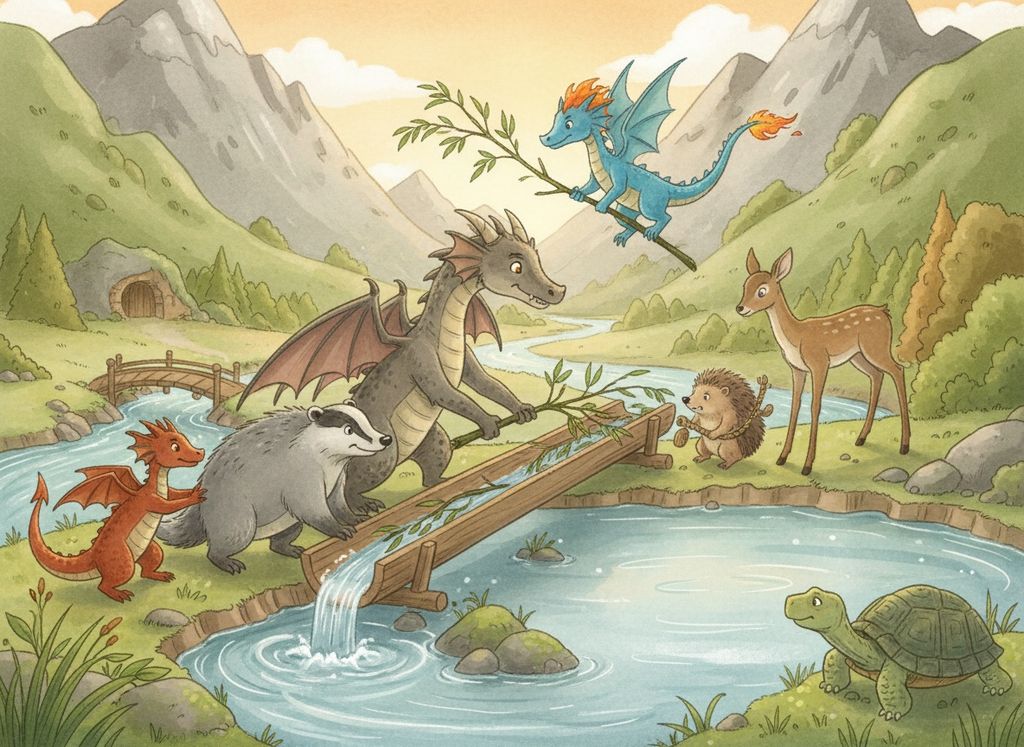
And the warm river water began to slide, gently, down the woven leaves and into the pond.
It pooled at the edge of the ice. It soaked in. The ice began to soften, not cracking, not churning, just softening, like butter in a warm cave.
Frost stood beside Ember. They watched the ice grow clear at the edges.
“I have never fixed anything before,” said Frost. “I only break things. I break things all the time, by accident.”
Ember looked at the fish. They were moving. Fins twitching. Slow, sleepy, but moving.
“You did not break today,” said Ember. “You helped. You knew about the warm water.”
“That is not a fire skill,” said Frost.
“No,” said Ember. “It is a better one.”
By sunset, the pond was soft. The fish swam in slow, wobbly circles. Frost knelt at the edge and watched them.
“They are okay,” said Frost.
“They are okay,” said Ember.
Frost looked at Ember. “You did not breathe fire.”
“I cannot,” said Ember.
“Good,” said Frost. “Then you and I are the same kind.” And Frost smiled, a small, cold, happy smile. “We are the kind who figure it out.”
Ember smiled too. His nose twitched. He sneezed, sideways, into the willow tree, setting a single leaf on fire.
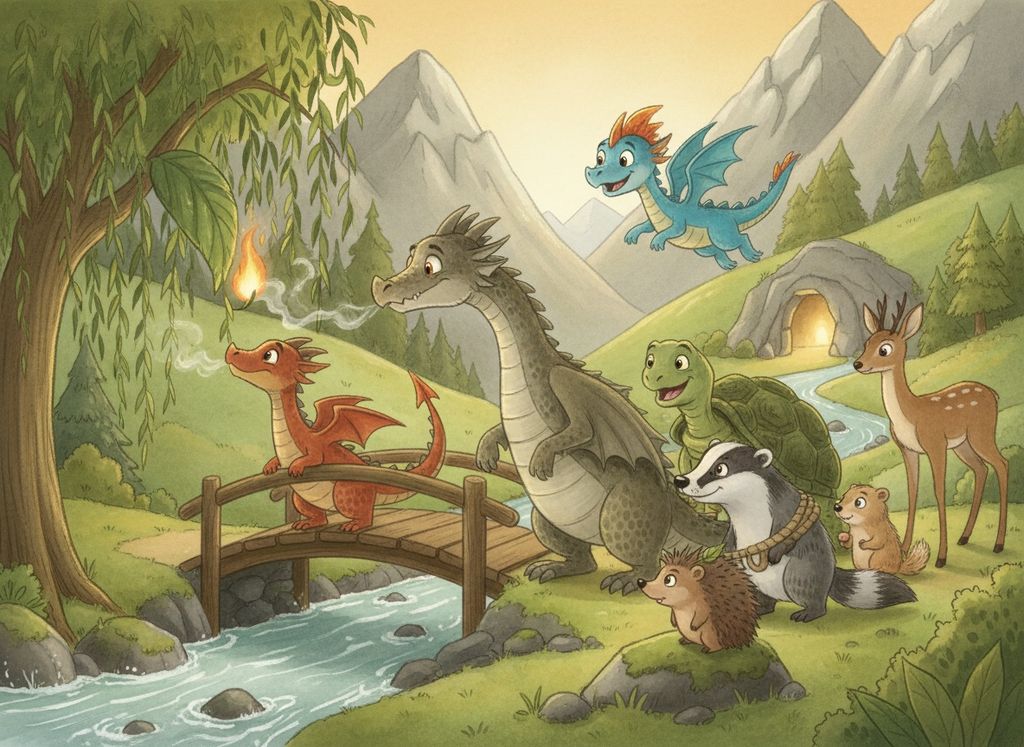
Spark put it out with a neat puff of flame.
“Good enough,” said Thistle.
And the fish swam on.