Ember's Way
The Sick River
The River Char ran through the middle of the Valley of Ash like a long, silver-blue ribbon. Every morning, Ember flew down to its banks to practise. Not fire. He didn’t practise fire. He practised balancing on wet stones and watching the way the water moved.
“The river is chatty today,” said Thistle, trotting up beside him.
Ember tilted his head. The water did look chatty. It fizzed and bubbled. But it also looked… wrong.
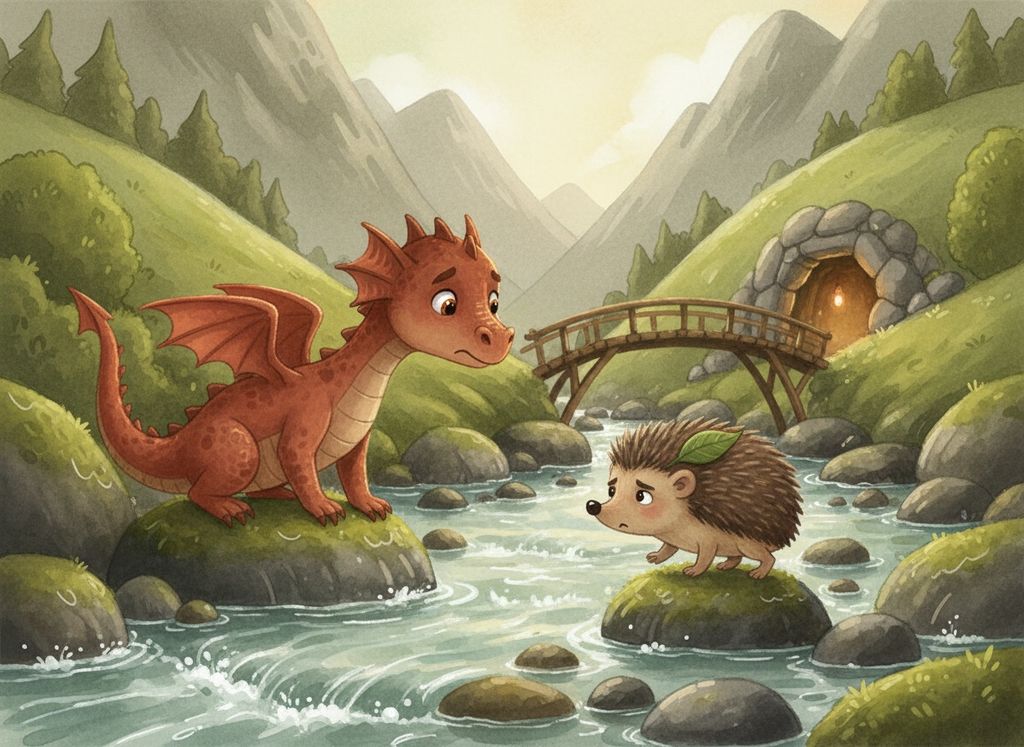
The Char was not silver-blue. It was pale yellow, like old lemon rinds left in the sun. And it smelled like a sneeze that had gone sideways.
“Thistle,” said Ember. “Is the river supposed to look like that?”
Thistle squinted. “I have seen worse,” she said. But she was lying. Her nose was doing a little twisty thing that meant she was worried.
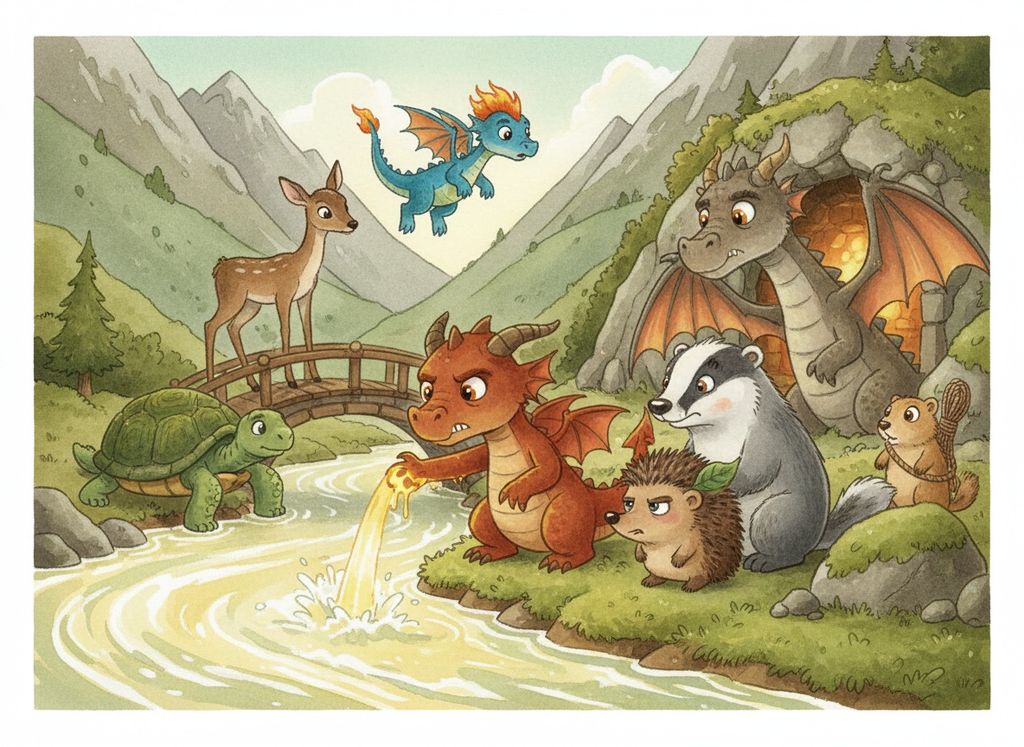
Ember dipped one claw into the water. It came out stained the colour of musty paper. He sniffed it. He did not sneeze, which was a good sign.
“Something is wrong,” he said.
“Someone should burn it,” said Spark, landing beside them in a puff of smoke. She breathed a neat little flame over the water. The yellow did not go away. It just looked slightly hotter.
“That didn’t help,” said Thistle.
“It didn’t not help,” said Spark.
Ember looked upstream. “I think we should find out where the river is coming from.”
“I can fly there in three wingbeats,” said Spark.
“I can walk there,” said Ember.
Spark looked at his small, slightly asymmetrical wings. “Okay,” she said. “I will fly ahead and report.”
She shot off like a kicked marble. Ember and Thistle followed along the bank.
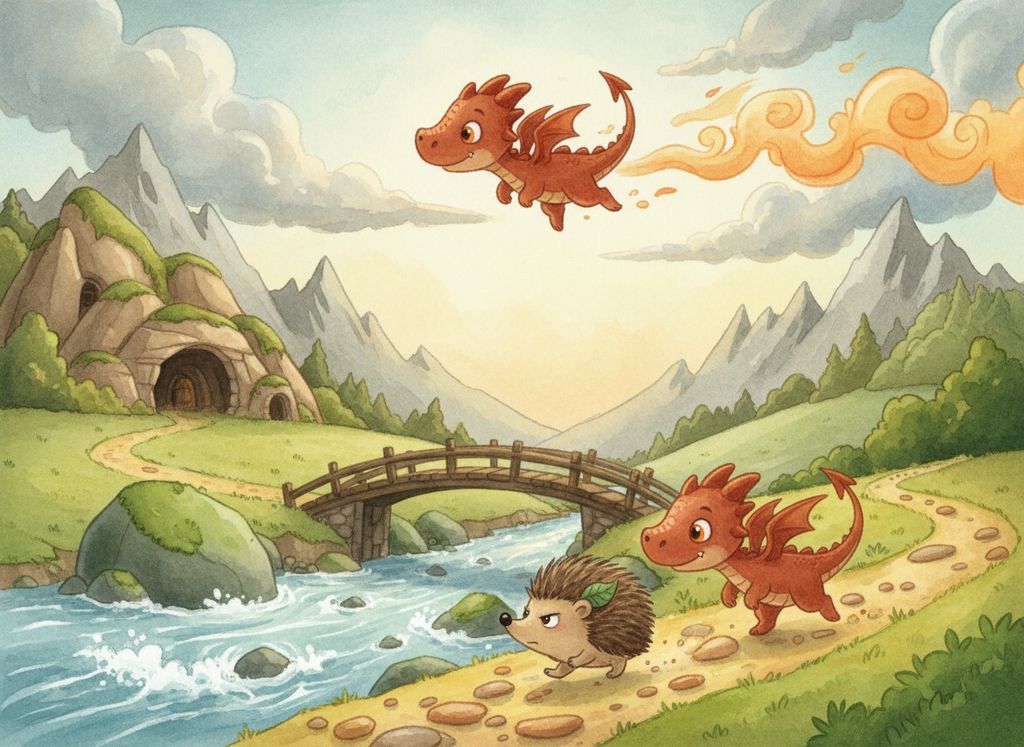
They walked past the Great Dragon Library, where the river bent around the cliff. They walked past the meadows where the low-summer flowers grew. The yellow got stronger. The bubbles got fizzier.
“The river is getting sicker,” said Thistle.
“We are getting closer to the sick,” said Ember.
After a long while, they reached the place where the Char came out from beneath a big, grey rockfall. The water poured from under the stones like a held-in breath being let out. But it was pouring out yellow.
Spark was already there, hovering.
“I found it!” she called. “Look!”
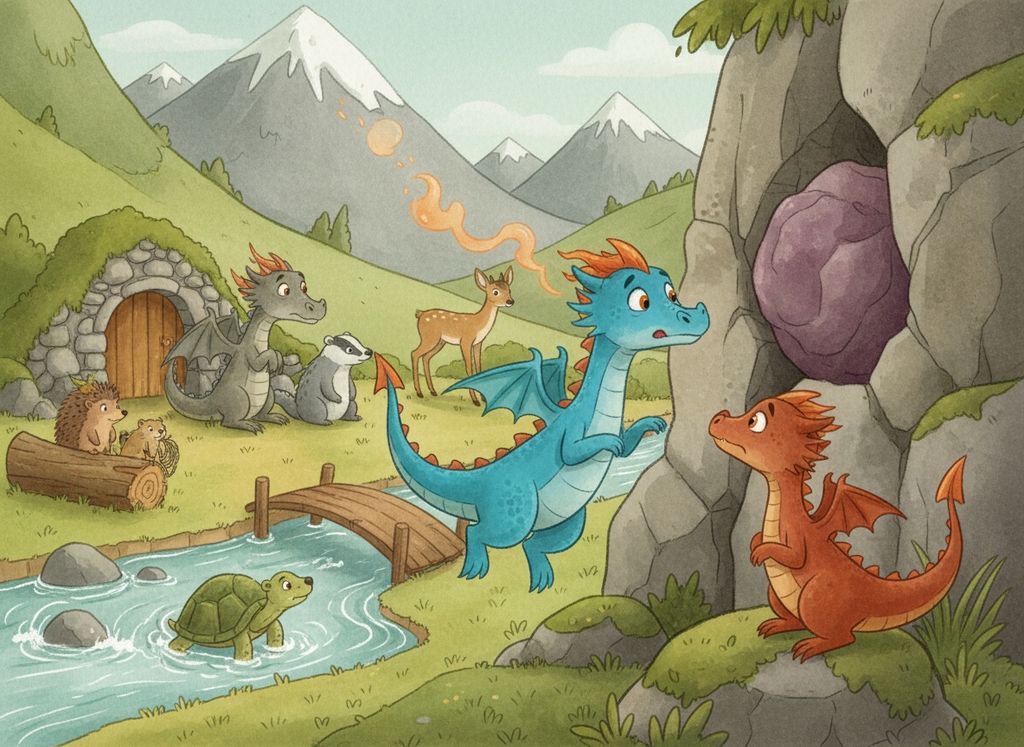
She pointed her nose at a crack between two boulders. Inside the crack, something gleamed. It looked like a fat, lumpy stone the colour of a bad bruise.
“That is blocking the river’s mouth,” said Ember.
“It’s a mineral deposit,” said Spark. “Old, nasty, and full of something that makes the water turn yellow. I’ll blast it.”
She took a deep breath.
“Wait,” said Ember.
Spark let the breath out in a polite little puff. “Wait?”
“If we blast it,” said Ember, “you’ll shatter it. The pieces will wash downstream. Little bits of sick mineral, all the way to the meadows. Maybe into the drinking pools.”
Spark’s fire-puff vanished. She looked at the deposit. It was very big. A blast big enough to break it would definitely send chunks flying.
“I could do a small blast,” she said.
“The deposit is wedged in tight,” said Ember, peering at it. “A small blast would only make a small crack. But the water is pushing hard. A small crack might become a big crack later. And then we’d have uneven pieces rolling around in the river.”
Thistle nodded slowly. “That is not bad reasoning, for a dragon.”
Ember sat down on a flat stone. He looked at the deposit. He looked at the river. He looked at the sky.
“Fire is not the answer,” he said. “Or not the only answer. What does water do?”
“It flows,” said Thistle.
“And what does a deposit do when it’s in the way?”
“It stays,” said Spark.
“But what does it stay in?” asked Ember. His eyes went wide. “It stays in the crack. It’s wedged in the crack. And the crack is narrow. But the deposit is bigger than the crack, that’s why it’s stuck.”
He stood up. He walked to the boulder and pressed his small paw against the side of the deposit.
“If we could make the crack bigger on the outside of the stone, the deposit would slide forward and the water could push it out into the open. Then we could lift it away.”
“How do you make a crack bigger without fire?” asked Spark.
Ember looked at the ground. There was a long, straight stick. He picked it up. He wedged the stick between the deposit and the boulder.
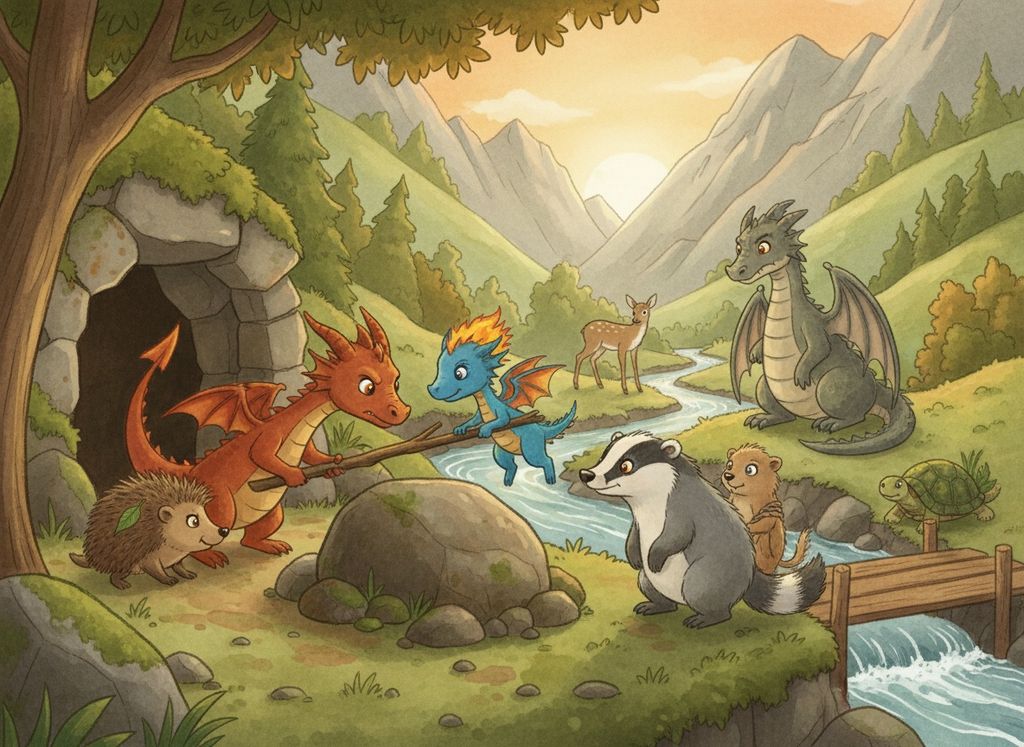
“Can you push the stone from the other side?” he asked Spark.
Spark leaned her shoulder into the boulder. The boulder did not move.
“Push harder,” said Thistle, who was, in fact, pushing too. She was very small, but she was very determined.
Ember shoved the stick deeper. The crack creaked. The deposit wiggled.
“Again,” said Ember.
They all pushed together. The stone groaned. And then, pop, the mineral deposit slid forward and out of the crack, rolling into the shallow water with a heavy, wet sound.
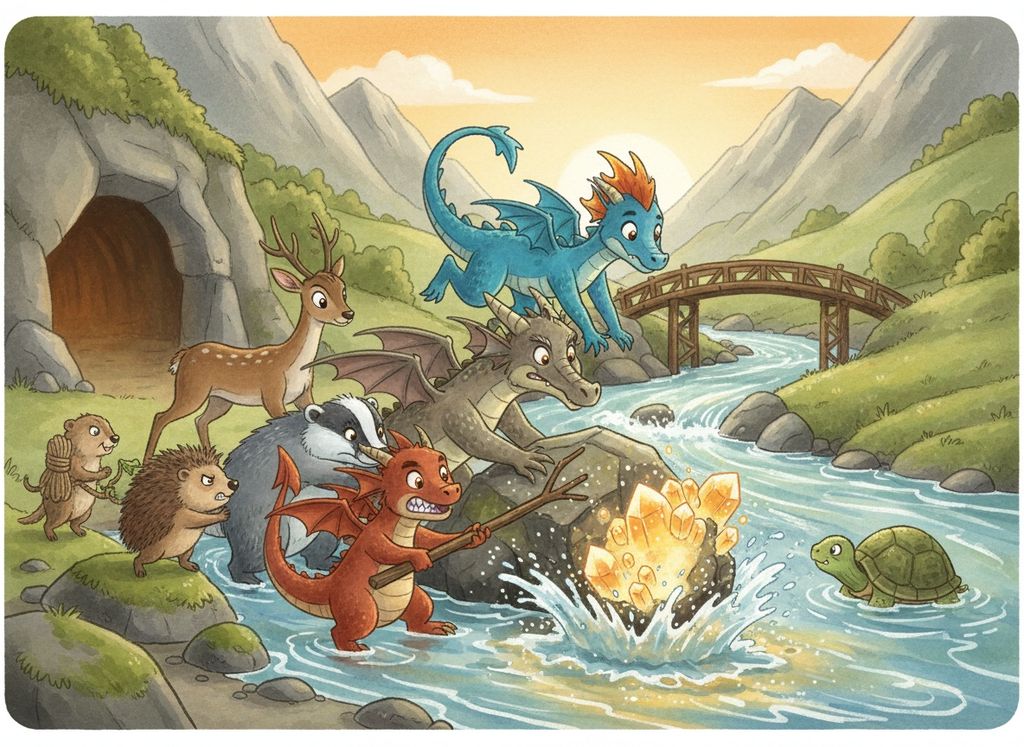
The river ran clear.
It poured up from under the rockfall like a bright silver-blue laugh, washing the yellow away in an instant. The bubbles stopped. The smell faded. The Char danced again.
Spark stared. “You did that with a stick.”
“We did that,” said Ember. “And a hedgehog.”
Thistle sniffed. “I am very strong for my size.”
Spark looked at the deposit, sitting in the shallows. “I could still burn it,” she said.
“You could,” said Ember. “But maybe we could show it to the librarian first. It might be good in a book.”
Spark grinned. “Okay. But I’m coming with you when you tell Grandfather Cinder.”
“Why?”
“Because I want to see his face when you explain the stick.”
That evening, Grandfather Cinder listened to the whole story. He did not laugh. He did not look surprised. He just nodded, slowly, and looked at Ember with warm, old eyes.
“Fire is fast,” said Grandfather Cinder. “But it is not the only way. You found the one thing that moves around the problem.”
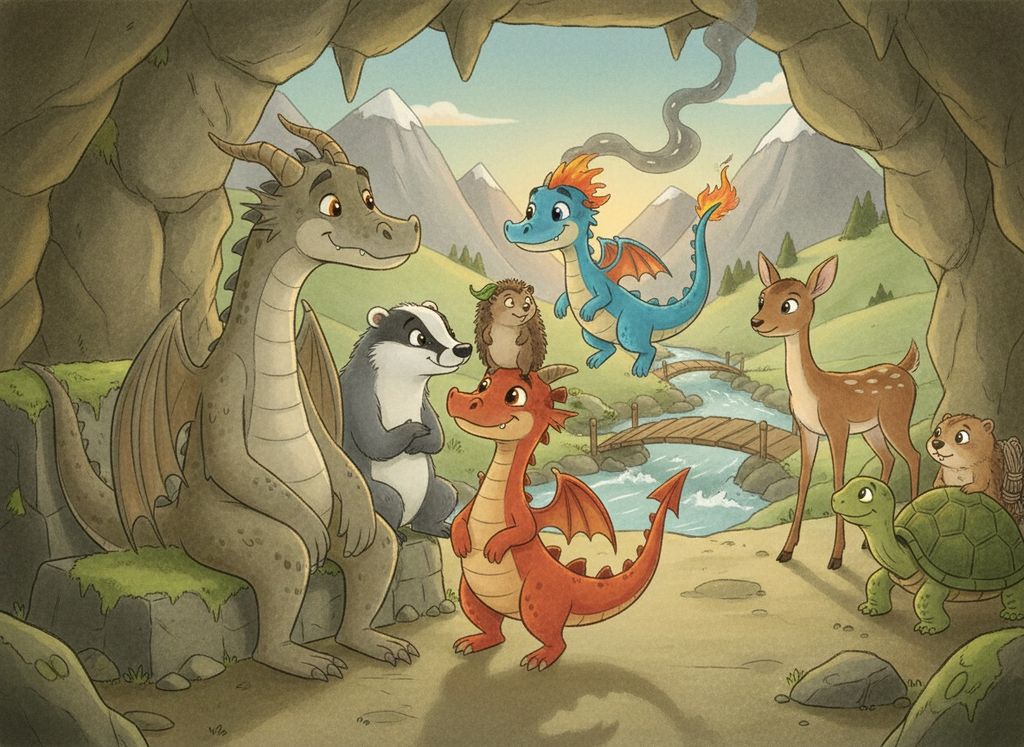
“A stick,” said Ember.
“A better idea,” said Grandfather Cinder.
And the river, glowing clean under the moon, ran on.