Ember's Way
The Frozen River
The River Char ran through the Valley of Ash like a long, silver ribbon. It sang over stones. It whispered under bridges. It was the sound the valley woke up to and went to sleep by.
Until one morning, when the river did not sing.
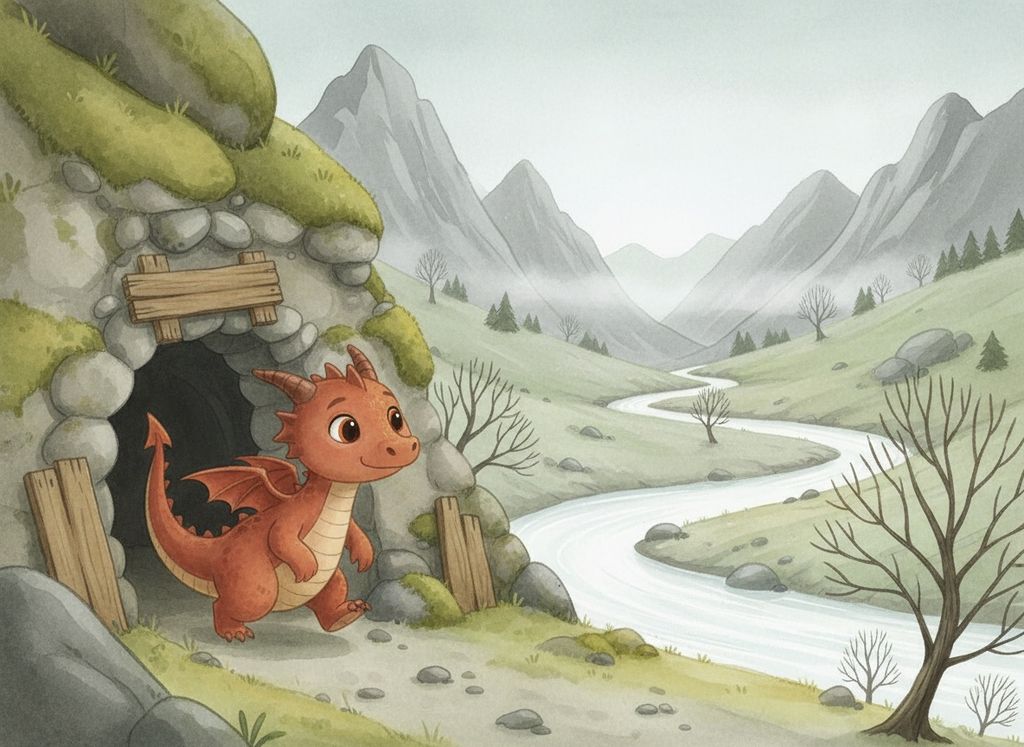
Ember stepped out of his cave and blinked. The air was sharp and cold. The river was still. It was not silver anymore. It was white and hard and very, very still.
“The river is asleep,” said Ember.
“The river is frozen,” said Thistle, who was standing on a rock and looking extremely unimpressed. “It does that when it gets cold. It stops moving. It becomes a very long, very inconvenient ice cube.”
Ember touched it with his paw. It was cold and smooth and solid. “Can we break it?”
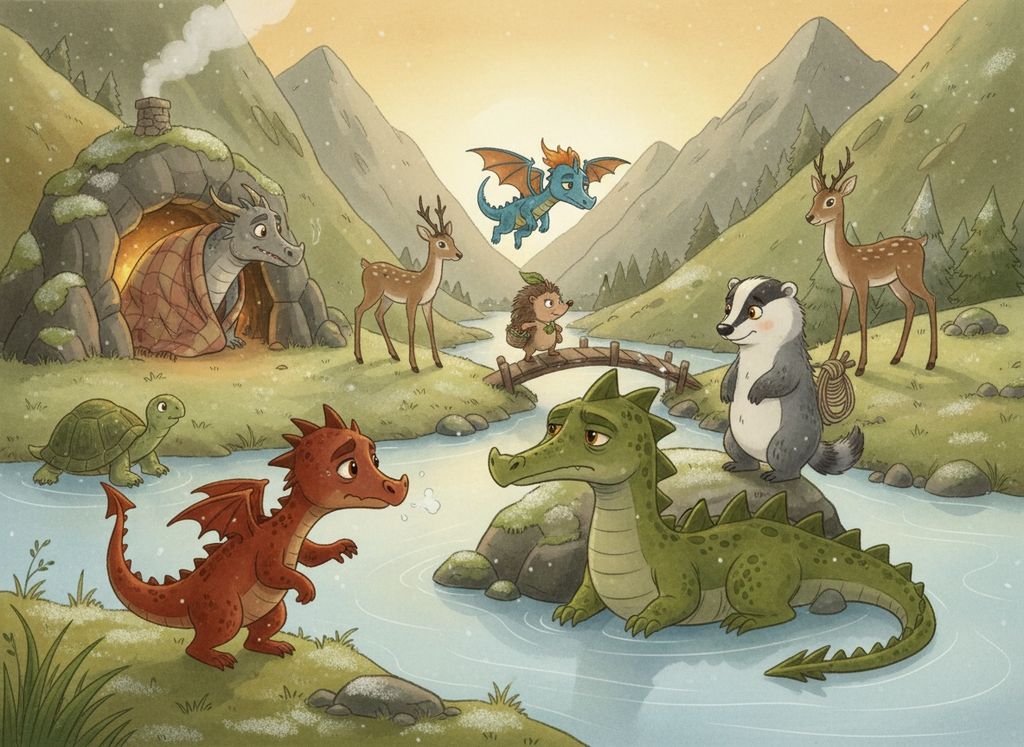
“Fire can break it,” said Thistle. “That is what fire is for. You cannot.”
She said it the way she said everything, like it was simply a fact. And it was.
Down in the valley, the other dragons were already gathering. Spark was there, breathing a long, steady stream of flame onto the river’s surface. Steam rose in great white clouds. The ice crackled and groaned.
“It’s working!” Spark called. “We just need more heat!”
Dragon after dragon took a turn. They breathed fire until their chests were empty. The ice melted in places, then froze again. The river stayed asleep.
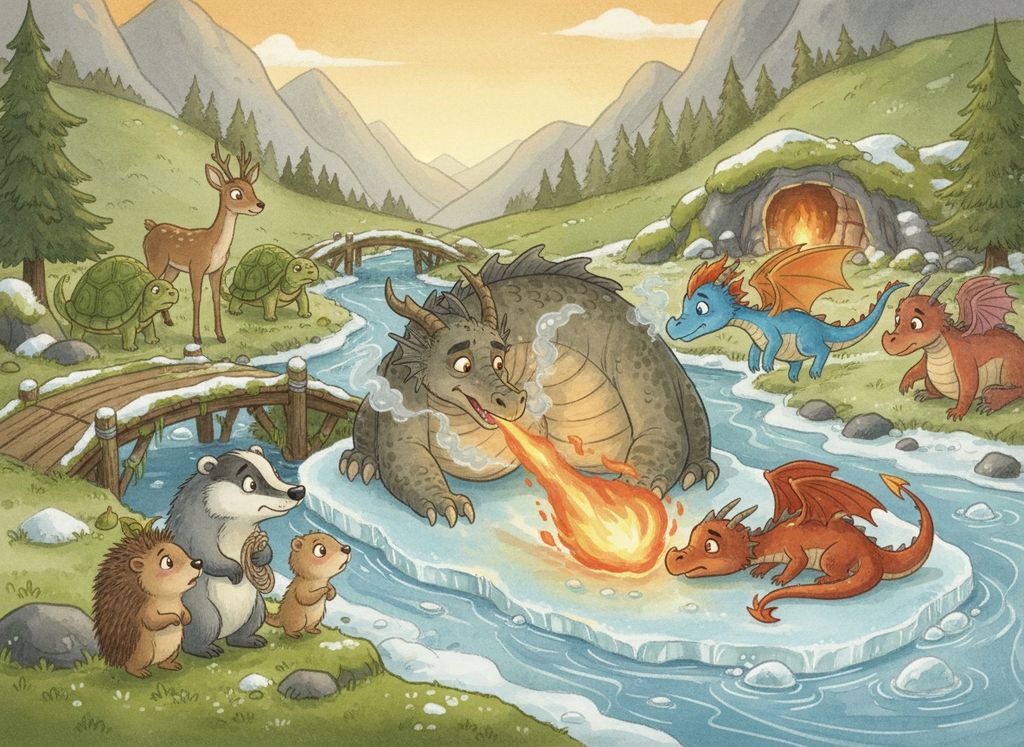
Grandfather Cinder sat on the bank, watching. He did not breathe fire anymore. He just watched.
“The air is too cold,” he said quietly. “The fire melts the top, but the cold freezes it again before the water can move. We need something warmer than fire.”
Ember sat beside him. “What is warmer than fire?”
“Not much,” said Grandfather Cinder. “But warmer does not always mean hotter. Sometimes it means steadier. A fire is bright and loud and then it is gone. Warmth that lasts is different.”
Ember thought about this. He thought about it all morning while the other dragons melted and the ice re-froze. He thought about it while he ate a small, cold breakfast. He thought about it while he walked along the frozen river, pressing his ear to the ice.
And then he heard something.
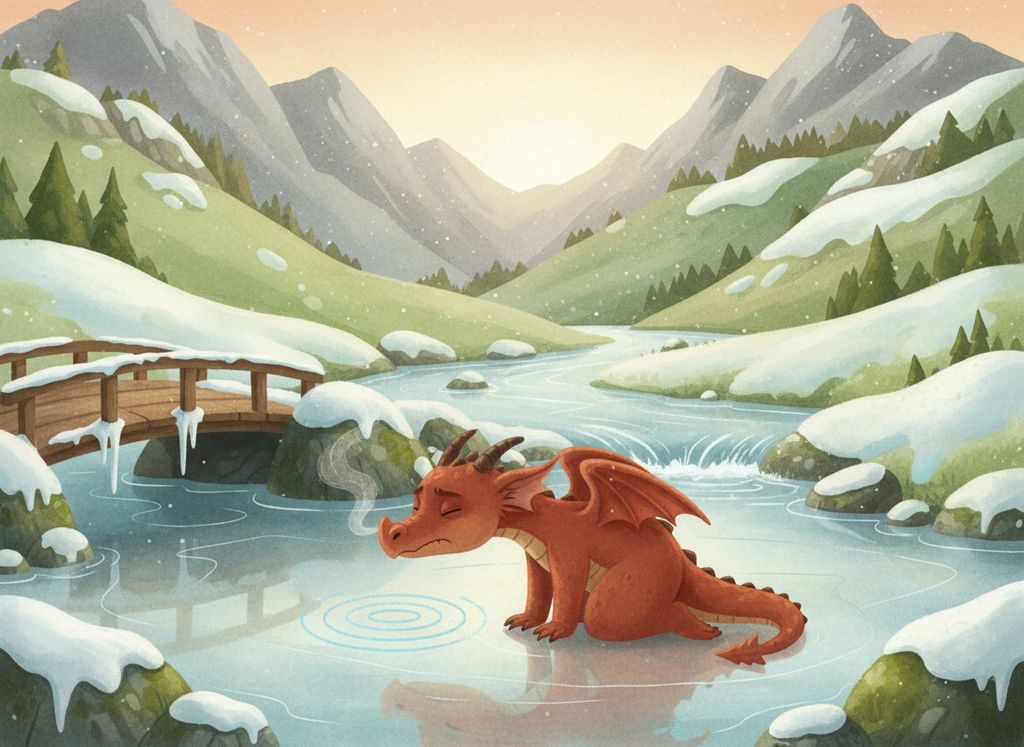
Under the ice, very far down, there was a sound. A soft, churning, bubbling sound. It was a sound the river made in the summer, in the deep pools where the water never quite cooled.
“There is water moving down there,” Ember said.
Thistle peered over the edge. “That is not possible. The river is frozen solid.”
“Not here,” said Ember. “Listen.”
Thistle pressed her ear to the ice. She stayed very still. Then she huffed. “That is a spring. An underground spring. It comes up through the riverbed. It is warmer than the river water. It is the last warm thing down there.”
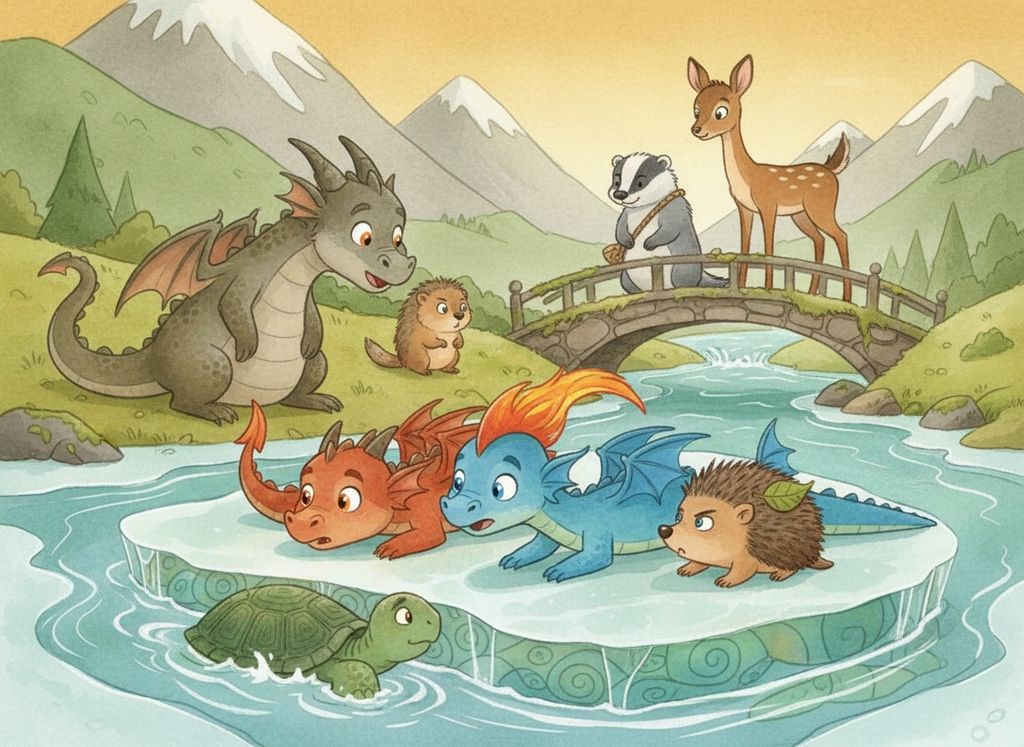
“And it is trapped,” said Ember. “The ice is holding it in.”
He looked at the frozen river. He looked at the dark mountain slopes. He looked at the ground beneath his paws.
“What if,” he said slowly, “we did not melt the ice at all?”
“Then the river stays frozen,” said Thistle.
“What if we gave the warm water somewhere else to go?”
Thistle stopped huffing. She looked at him with her small, sharp eyes and did not speak for a long moment.
“That is not a bad idea,” she said. “For a dragon.”
Ember’s nose twitched. He did not sneeze. He smiled.
He ran back to the others and told them his plan. Spark listened with her head tilted. Grandfather Cinder listened with his eyes closed.
“An underground spring,” Grandfather Cinder said. “You found it by listening.”
“I found it by not breathing fire,” said Ember.
“That is also a way of finding things,” said Grandfather Cinder.
So the dragons did something they had never done before. Instead of breathing fire, they dug.
They clawed at the earth beside the riverbank. They scooped and scraped and pushed. They worked in the cold, and their breath made small clouds, and their paws grew muddy and tired. Ember dug the smallest scoop of all, but he dug it carefully. He dug it in the right place.
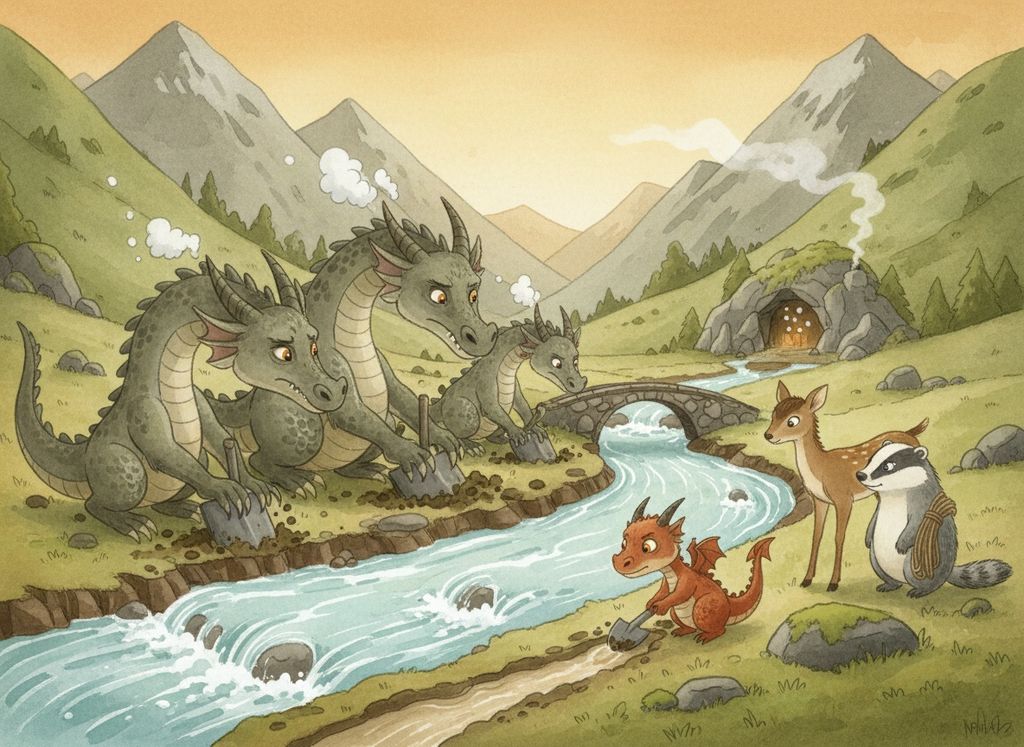
The channel was not long. It sloped down from the frozen river to a hollow in the meadow, where the snow had melted early and the ground was soft. Ember dug until the channel was deep enough to hold water. Then he dug a little more.
And then, very gently, he broke the ice at the river’s edge. Just a small crack. Just enough.
The water came slowly at first. A trickle. A thin, dark ribbon of warmth sliding into the channel. Then more. The warm spring water, freed from the ice, found the new path and followed it.
The meadow hollow filled with a small, steaming pool. The ice around it melted in a perfect circle. The air above it was warm and soft.
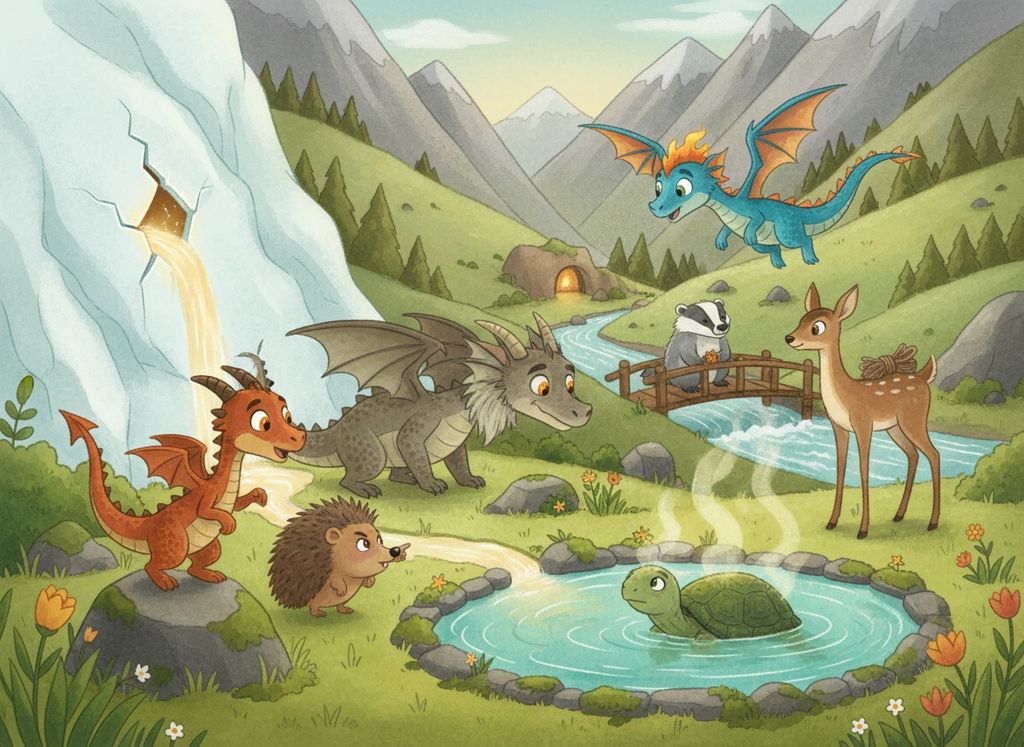
And the river? The river stayed frozen.
But the water was moving. It was not moving the way it usually did, not fast, not loud, not singing. It was moving quietly, underground, finding a new way through the world.
The other dragons stood and stared at the steaming pool.
“You did not melt the ice,” Spark said.
“No,” said Ember.
“You made the water a different road.”
“Yes,” said Ember.
Spark looked at the pool. She looked at the frozen river. She looked at Ember. She did not say anything, but she nodded. That was enough.
All winter long, the River Char stayed frozen. But across the meadow, the small pool steamed and bubbled, and the animals came to drink from it, and Thistle sat beside it and declared it “not bad.”
And when the spring came, and the river sang again, the channel stayed. It never disappeared. It ran alongside the river, small and steady and warm.
Ember walked past it every day. Sometimes he stopped and looked at it. He had made it with his paws, not his fire. He had made it by listening.
Grandfather Cinder joined him once, by the little channel.
“The river will never know it was helped,” Grandfather Cinder said.
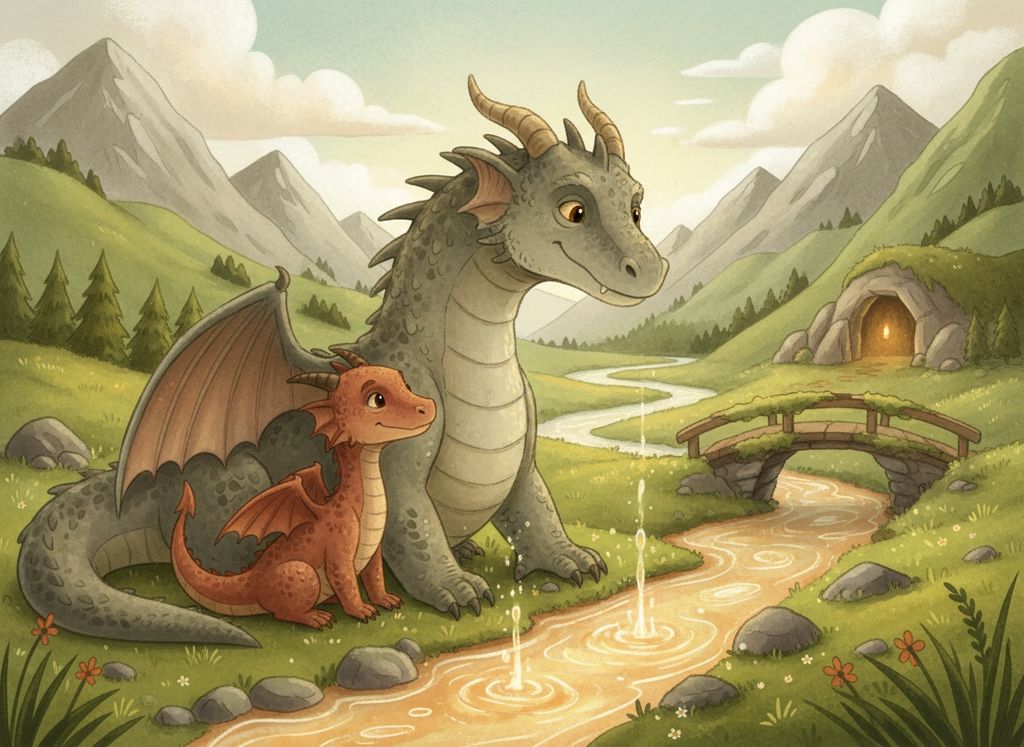
“That is all right,” said Ember. “I know.”
The water bubbled past them, warm and quiet, finding its way.