Ember's Way
The River Flood
The River Char ran through the Valley of Ash like a long, silver ribbon. In spring, when the mountain snow melted, the ribbon grew into a rope, and the rope grew into a snake, and the snake grew into a river that was very, very full.
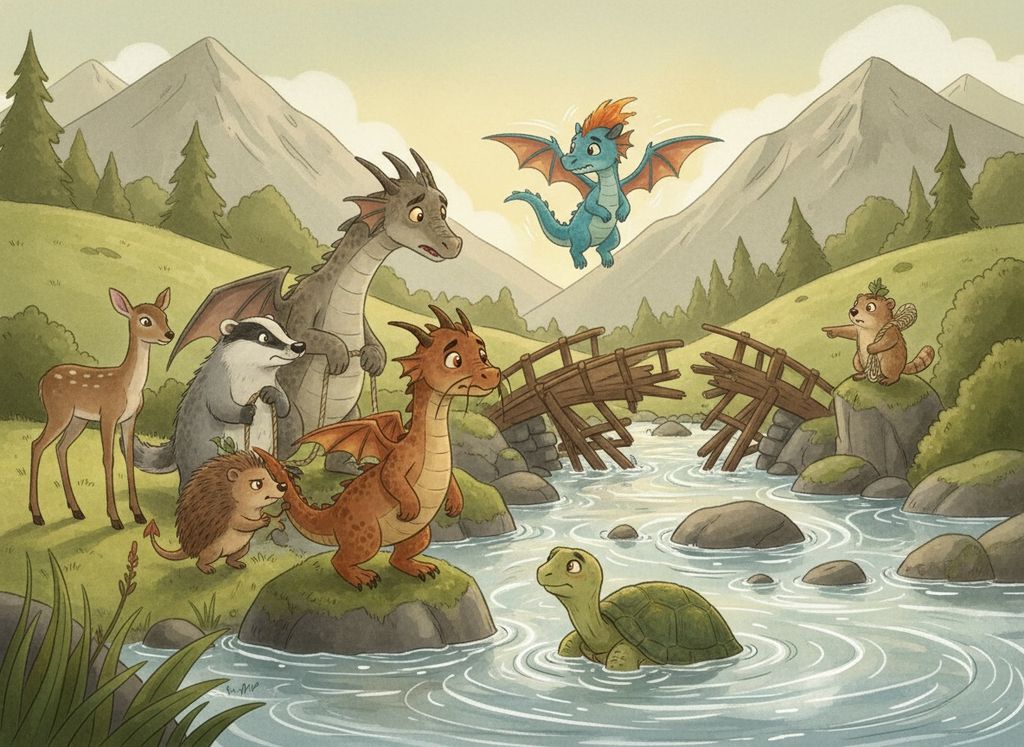
Ember stood on a rock by the bank, watching the water churn. His nose twitched. “It’s rising,” he said.
“It does that,” said Thistle, who was sitting on a smaller rock nearby, not looking at the water. She was looking at a seed she had found. “It’s called spring.”
“It’s rising fast,” said Ember. “And it’s heading for the Lowlands.”
Thistle looked up. The Lowlands was where her warren was. Where her family was. “How fast?”
“Fast,” said Ember.
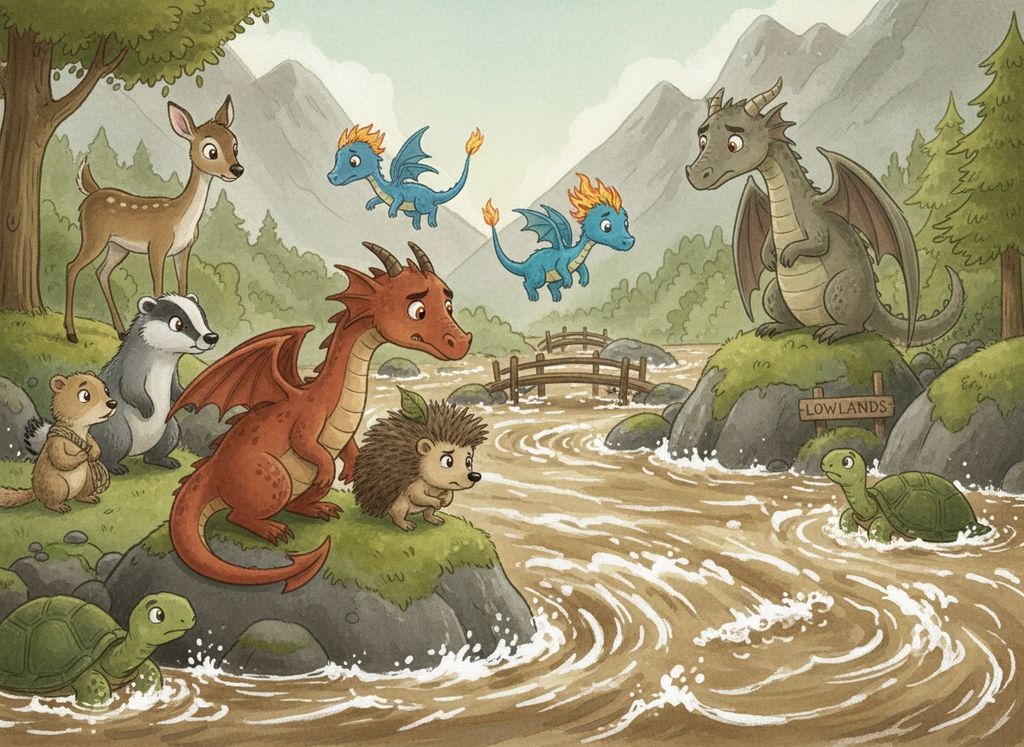
They both looked at the water. It was brown and pushy, shoving rocks out of its way, chewing the banks. Up ahead, the river curved around a bend that led downhill, straight toward the flat, soft meadows where the hedgehogs lived.
Just then, Spark landed beside them, scales gleaming. “Ready?” she said. “I can heat the riverbank and dry it out, create a dam of cracked earth. A few good blasts and we’ll have a wall strong enough to hold the water back.”
She puffed a small, perfect flame, showing off. It was beautiful.
Ember’s nose twitched again. “What happens when the wall breaks?”
“It won’t break,” said Spark. “I’m very good at this.”
“But the water will keep coming,” said Ember. “All day, and tomorrow, and the day after. Can you keep blasting for three days?”
Spark stopped puffing. She looked at the water. It was still rising. “I can blast for a very long time,” she said. But she didn’t sound sure.
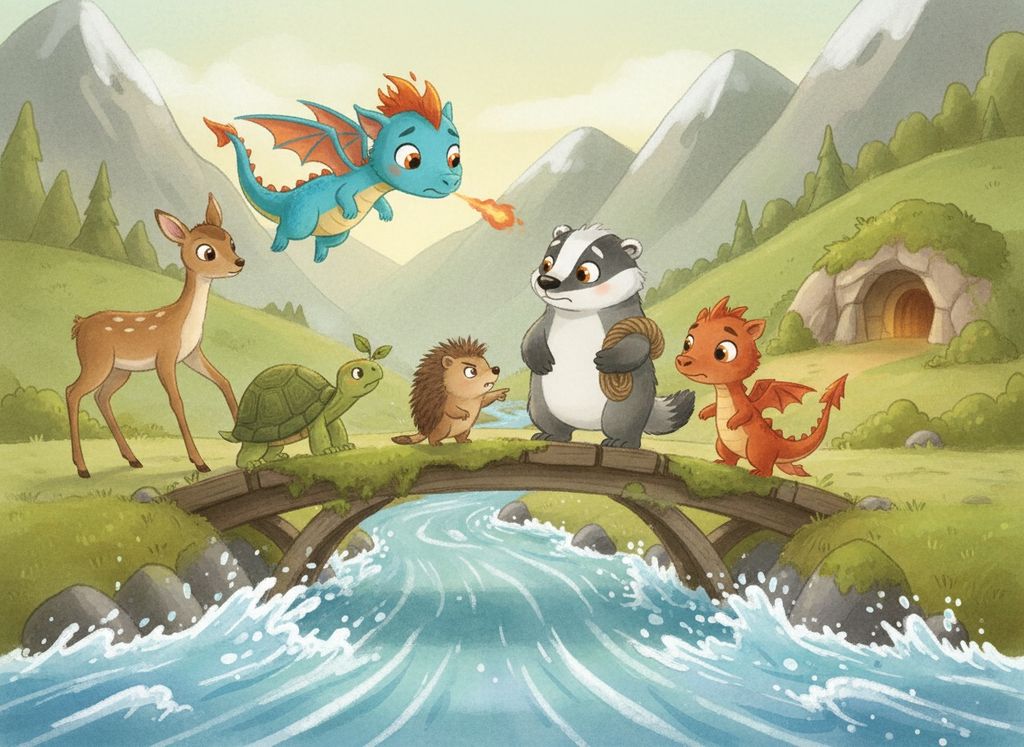
“That’s not the same thing,” said Thistle.
Ember walked to the edge of the water. He watched the river push against the bend, trying to find a way out. He watched a small stone get lifted, rolled, and carried away. He watched the water take the easiest path. That was what water did. It always took the easiest path.
“What if we gave it another path?” Ember said.
“What do you mean?” said Spark.
Ember pointed upriver, toward the bend. “The water wants to go that way, to the Lowlands. But look... over there, past those rocks, there’s an old dry channel. It’s higher than the Lowlands, but it’s lower than the bank right here. If we make a little cut in the bank here, the water will turn into the dry channel instead. It will go around the Lowlands and come back to the river further down.”
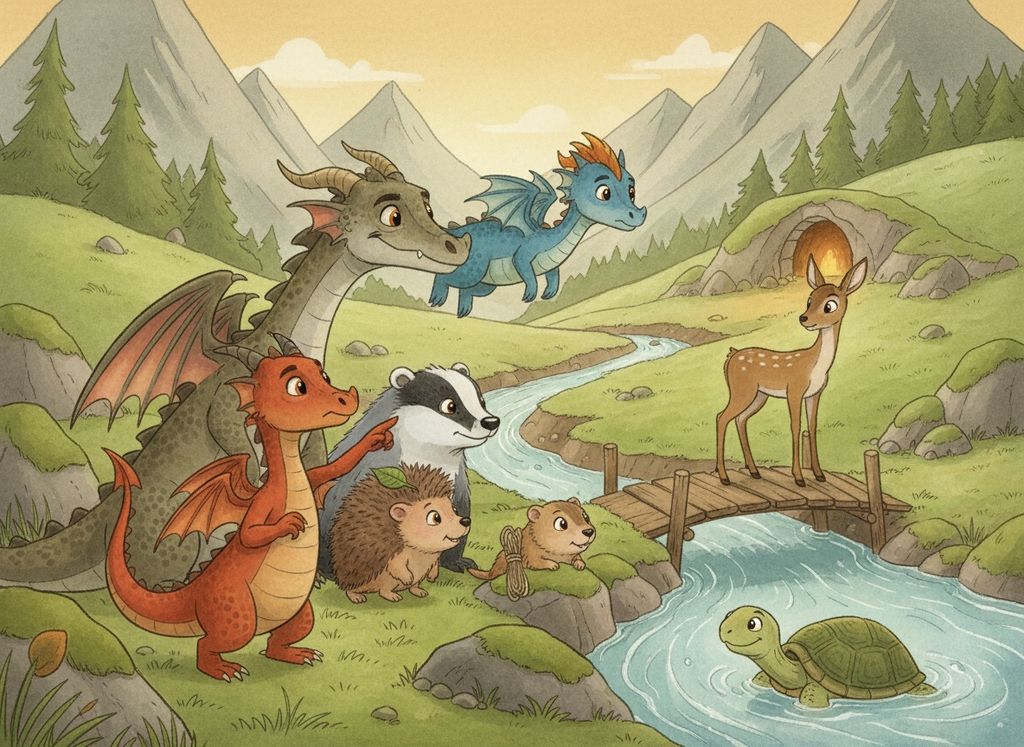
Spark tilted her head. “That’s a big cut. The water’s heavy.”
“We can use stones,” said Ember. “Small ones. We stack them in a curve, like a ramp. We don’t build a wall to fight the water. We just show it a better way.”
Thistle crunched across the stones to look. “You’re going to build a little road for the river?”
“A levee,” said Ember. “A little bridge for the water to walk on.”
“That’s silly,” said Spark. But she didn’t fly away.
They started small. Ember picked up a stone the size of his paw and set it at the edge of the channel. Thistle rolled a bigger one with her back feet. Spark carried three at once in her claws.
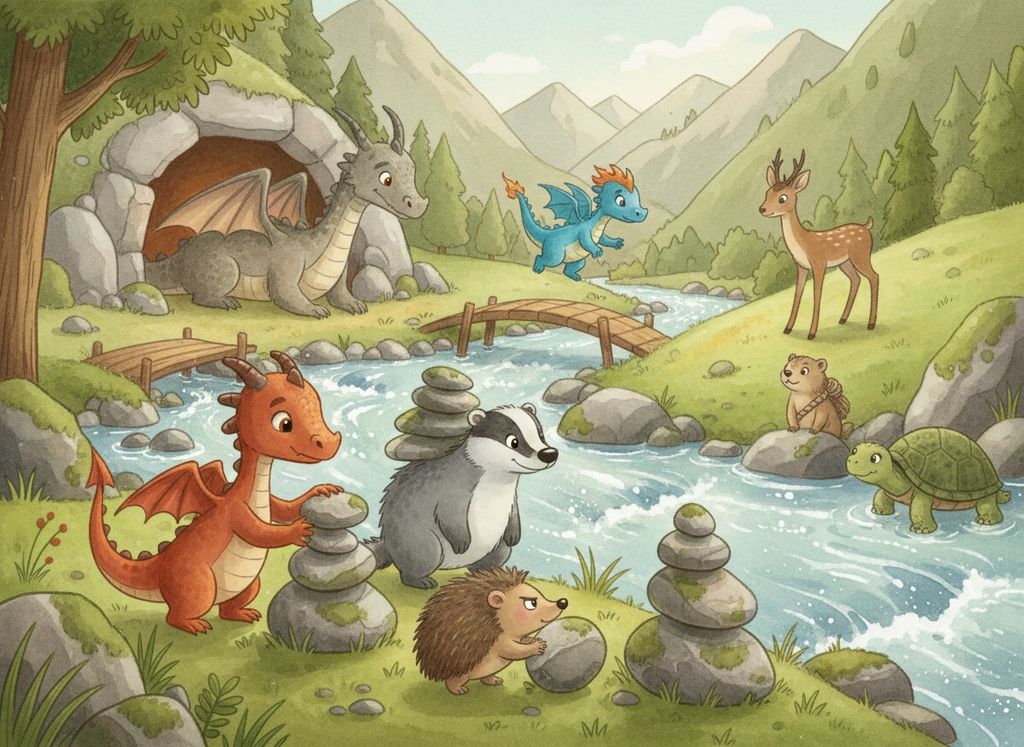
They built a line of stones from the bank, curving away from the Lowlands, a gentle arm guiding the water elsewhere. Ember was careful. He placed each stone where the water was trying to go, not where it was now. He watched, waited, and placed the next one.
“The water’s going to knock them over,” said Spark.
“Maybe,” said Ember. “But water finds the easiest path. If we make the easy path go where we want, it won’t bother with the stones. It’ll just follow.”
He placed another stone. And another.
On the first day, the river reached the levee. It hesitated. It pushed. Then it found a gap between two stones and slid through, turning slightly, away from the bend.
On the second day, the water was higher. It found more gaps, and the gaps led more water away. The Lowlands stayed dry.
“You did it!” said Spark.
“The river did it,” said Ember. “We just suggested.”
On the third day, the melt was at its peak. The river was roaring, brown, and huge. Ember placed the last stones, sealing the channel’s main route. The water came, big and heavy, and hit the curve, and turned. It turned calmly, like a horse following a path it trusted.
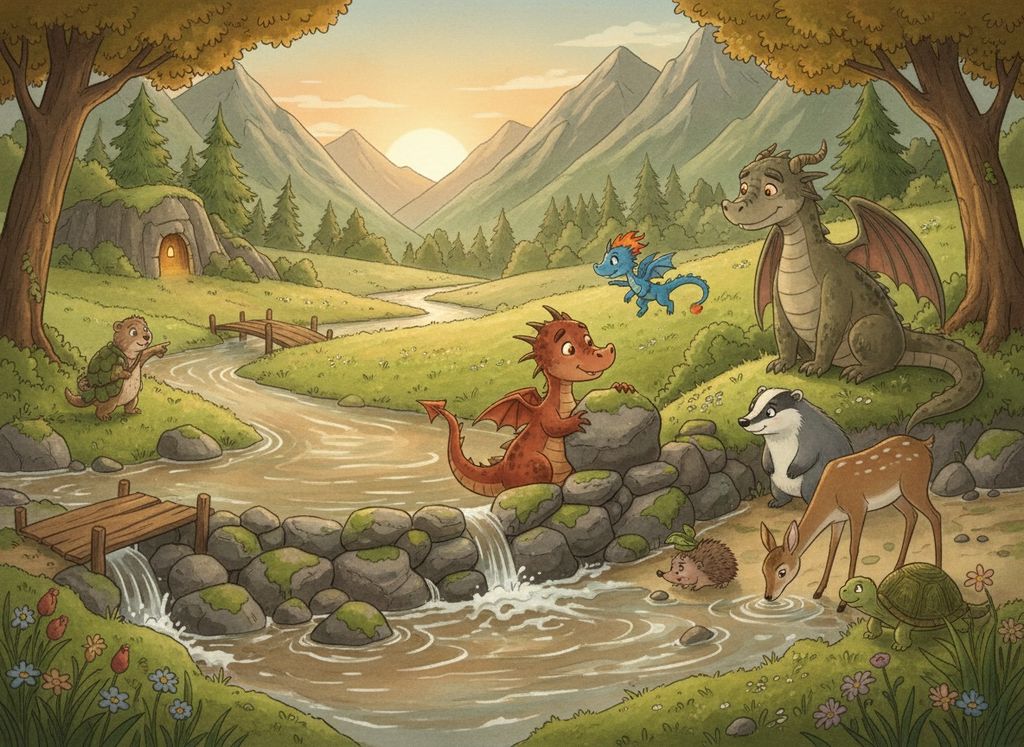
The river flowed away from the Lowlands, around the ridge, and back into its main bed further down. The meadows stayed green. The warrens stayed dry.
Thistle walked down the slope and stood on the safe, dry grass. She looked back at Ember, who was sitting on his rock, covered in river mud, tired and happy.
“Not bad,” she said. Then she paused. “For a dragon.”
Spark landed beside her, looking at the levee. “I could have heated the stones,” she said. “Made them stronger.”
“Then they would have held the water too long,” said Ember. “And when they broke, it would have all rushed out at once. This way, the water will soak through slowly. It won’t flood. It’ll just be damp.”
And he was right. By the end of the week, the channel was still carrying water, quiet and steady, and the Lowlands were dry.
That evening, Grandfather Cinder flew down and looked at the little stone levee. He looked at Ember. “You didn’t fight the river,” he said.
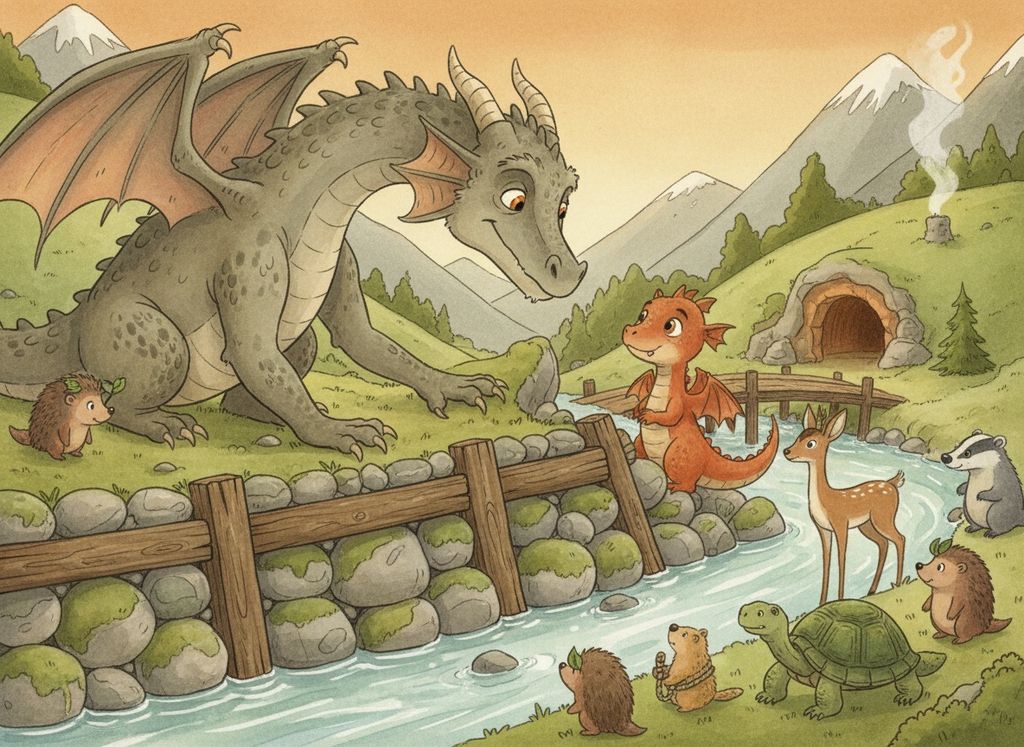
“No,” said Ember. “I just showed it where to go.”
“That’s what I did once,” said Grandfather Cinder. “A long time ago. I talked to a river for three days.”
“Did it listen?” said Ember.
“Eventually,” said Grandfather Cinder. “It just needed the right words.”
Ember looked at the stones. They weren’t words, exactly. But they were patient. They were small. And they were enough.
Thistle appeared at his side and dropped a seed on his paw. “For the levee,” she said. “In case it gets hungry.”
Ember put the seed in his pocket. “I’ll plant it later,” he said.
And he did. Right by the channel, where the water made its quiet turn. It grew into a small tree, which grew into a bigger tree, which every spring leaned over the water like it was listening too.