Ember's Way
Thistle Is Sick
Thistle was sick.
Not a little sick. Not a “I ate too many berries” sick. Not a “I got dust in my nose and sneezed twice” sick.
Thistle was very sick.
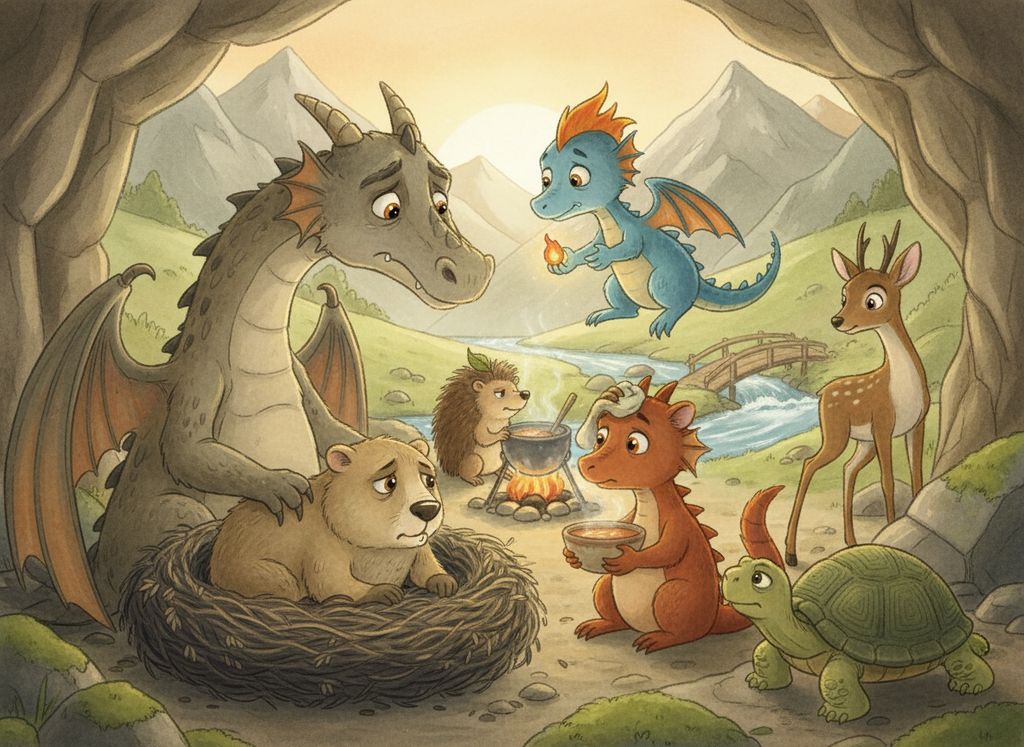
Her little nose was dry. Her little paws were warm. Her little eyes were half-closed, and she did not sit up when Ember knocked on the door of her warren.
“Thistle?” said Ember, poking his rust-red head inside. “I brought you a pebble. A very smooth one. I found it by the river.”
Thistle did not say, “That is a perfectly acceptable pebble, dragon,” which was what she usually said when Ember brought her things.
She just made a small, sad noise.
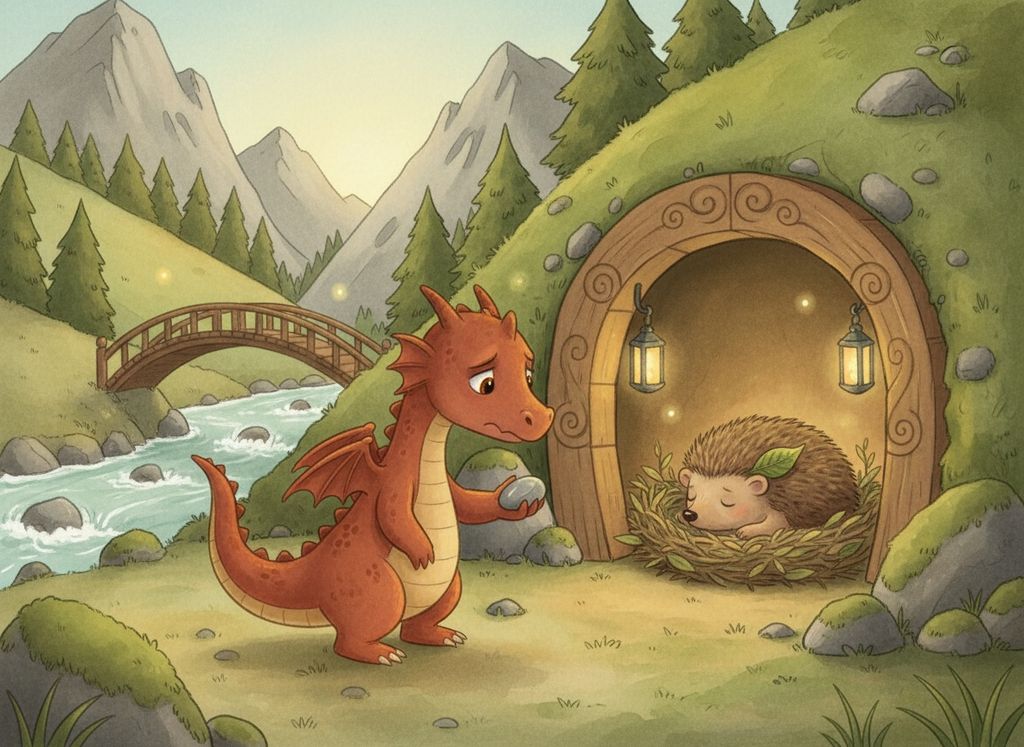
Ember’s tail drooped. He had never seen Thistle make a small, sad noise. Thistle made grumpy noises. She made huffy noises. She made “I have seen worse” noises.
She did not make small, sad noises.
“I will get Grandfather Cinder,” said Ember.
But Grandfather Cinder came to them. He had already smelled the sickness on the wind, because old dragons know things like that.
“She needs rest,” said Grandfather Cinder, peering at Thistle with his big, gentle eyes. “And water. And warm company.”
Ember waited for Grandfather Cinder to breathe fire into a little stone stove, because that was what dragons did when someone needed warmth. Grandfather Cinder’s fire was very good. It was steady and soft, and it could make a flame exactly the size of a teacup.
But Grandfather Cinder’s old knees creaked, and he could not climb down into Thistle’s warren. And Ember’s fire, well. Ember’s fire came out in sneezes, sideways, with a puff of smoke and a surprising fzzzt that lit nothing and singed his own whiskers.
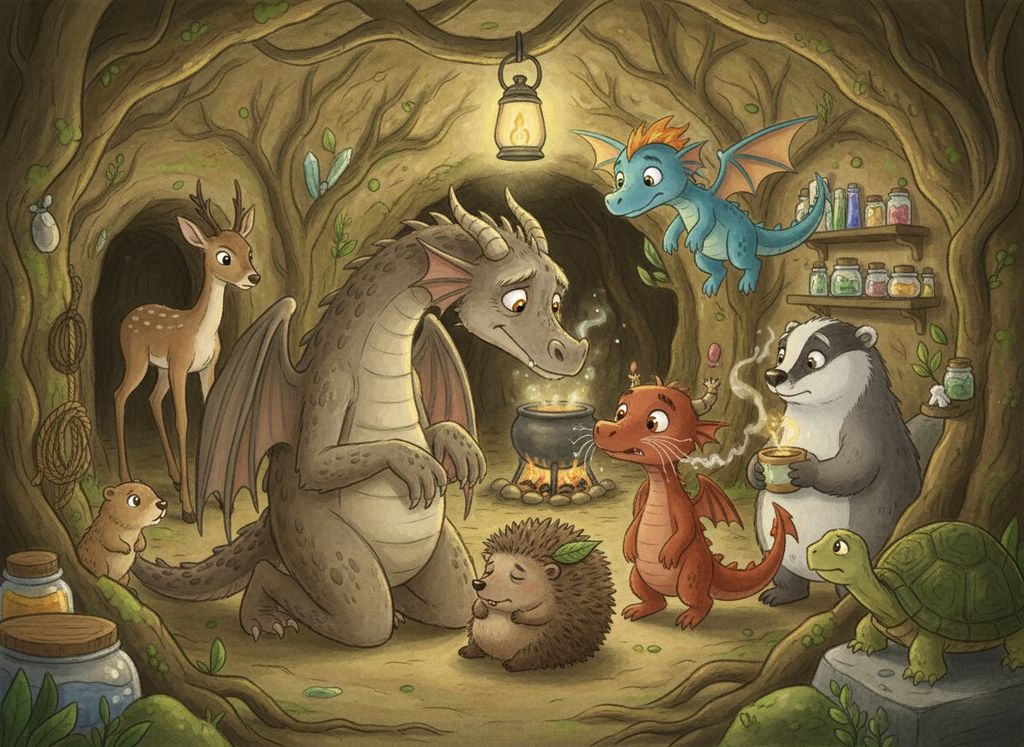
So there was no fire.
There was no puzzle, either. That was the strange thing. Usually, when something went wrong, Ember had to think. He had to find Another Way. He had to ask questions and solve things and surprise everyone with his clever idea.
But Thistle was sick.
You cannot solve someone being sick. Not with a lever. Not with a ramp. Not with a clever arrangement of sticks and vines.
Ember stood in the doorway of the warren, and he felt small.
“What do I do?” he asked.
Grandfather Cinder rumbled softly. “What do you do, when Thistle is well?”
“I talk to her,” said Ember. “I tell her things. I show her rocks.”
“Then do that,” said Grandfather Cinder. “She does not need a solution. She needs you.”
So Ember climbed into the warren.
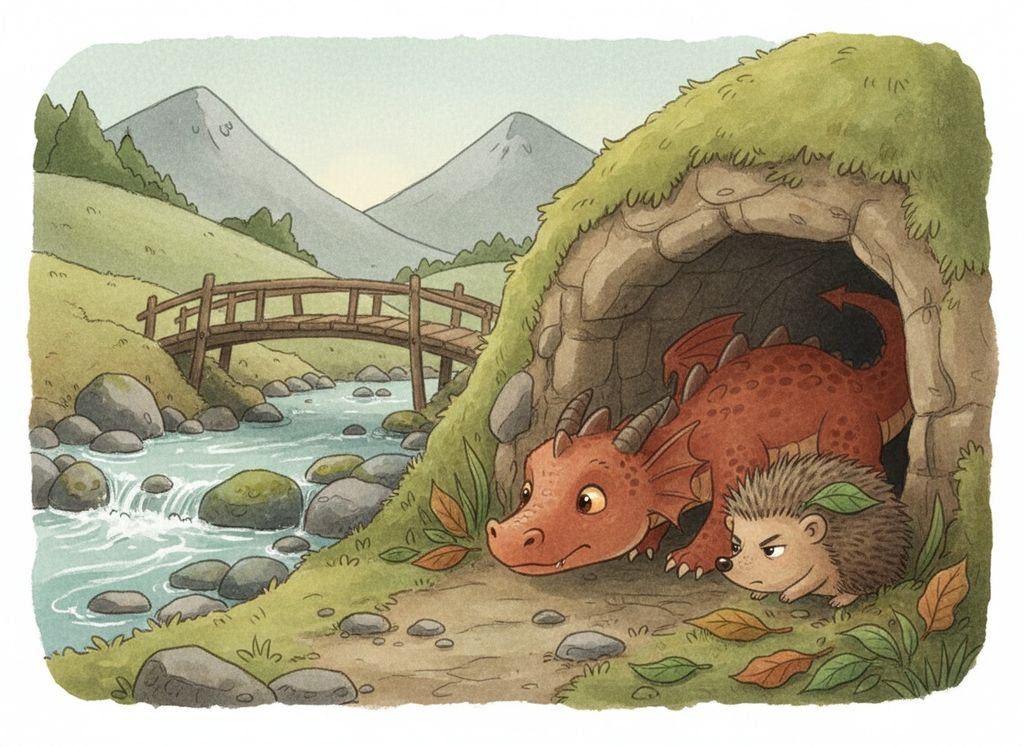
It was snug. It was dark. It smelled like dried grass and old leaves and the little bit of clover Thistle kept in the corner for snacking.
Thistle was curled in her nest, very small.
“I am not going to sneeze,” Ember said, because he knew this was important. “I am going to sit here, and I am going to be quiet, and you can just rest.”
Thistle did not say anything. Her nose twitched.
Ember sat.
He sat for a long time.
He watched Thistle breathe. In. Out. In. Out. Her little sides went up and down like tiny bellows.
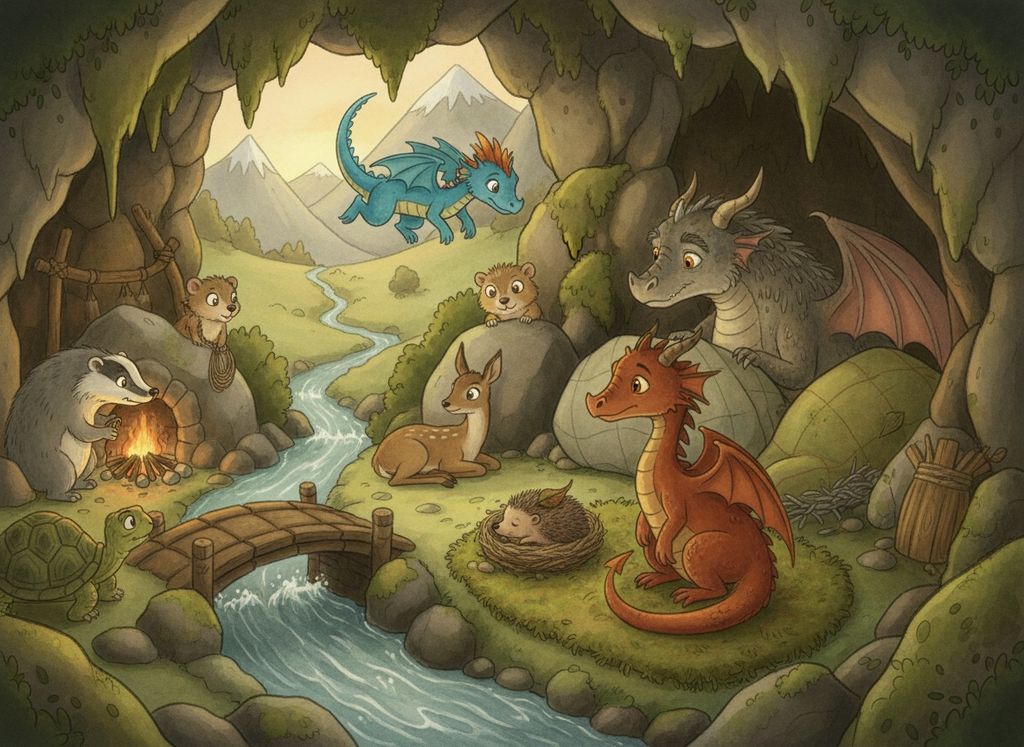
And Ember thought about all the times Thistle had helped him. When he got his wing stuck in a thornbush, Thistle did not laugh. She climbed up and bit through every thorn, one by one, and said, “I have seen worse.”
When Ember was afraid to go down the dark tunnel by the river, Thistle walked in front of him, and said, “Nothing in here is as scary as me.”
And when Ember had accidentally sneezed fire at his own tail and knocked himself over, Thistle had stood on top of him with her paws on her hips and said, “That was not bad, for a dragon.”
She had meant it.
Ember sat in the warren, and he did not have a clever idea. He did not have a plan. He just had himself.
So he talked.
He told Thistle about the cloud that looked like a frog. He told her about the new tunnel Spark had dug, and how she had breathed fire into it to make it smooth, and it was very nice, and it smelled like warm rock.
He did not say, “I wish I could make the tunnel smooth.”
He just kept talking.
“I saw a beetle today,” he said quietly. “It was carrying a crumb. It was very determined. I think you would have liked it. The crumb was bigger than its head. It did not stop trying.”
Thistle’s ear twitched.
Ember’s heart did a small hop.
He kept talking. He told her about the River Char, and how it sounded different today, almost like it was whispering. He told her about the three pebbles he had lined up outside her door, because he knew she liked symmetry even when she was too grumpy to admit it.
And then he remembered something.
Grandfather Cinder said she needed water.
Ember could not breathe fire to warm it, but he could dip his tail in the river. He did. He carried the water back in his cupped claws, cool and fresh, and he held it to Thistle’s mouth.
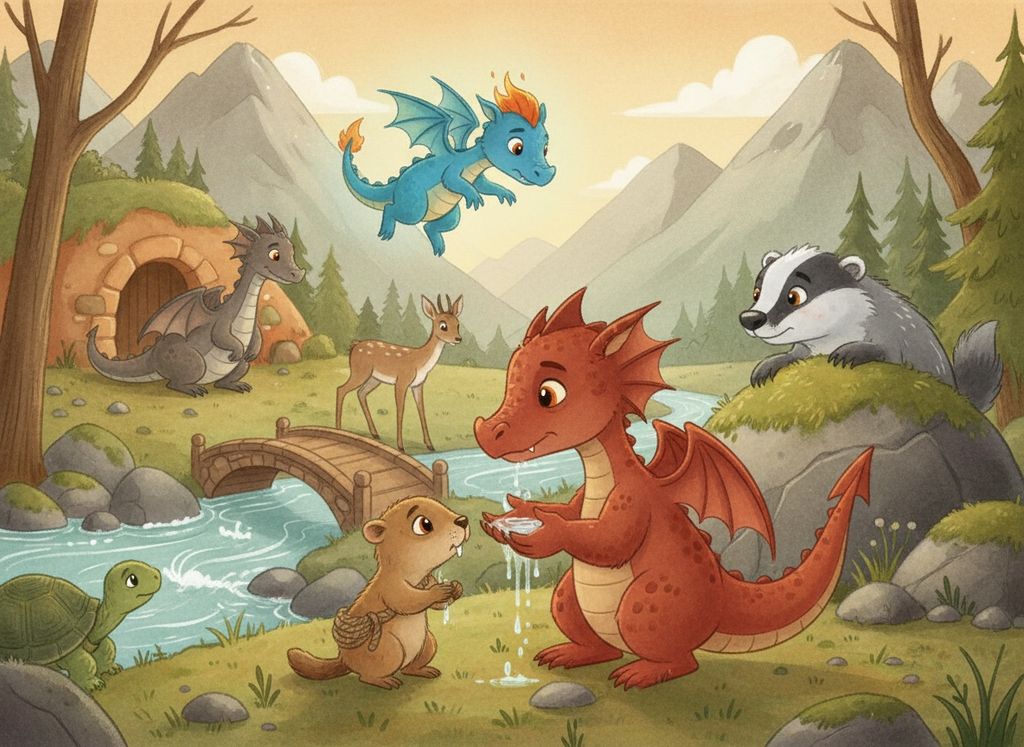
She drank a little. Her nose was still dry, but she drank.
Ember sat with her.
He did not fix anything. He did not make the sickness go away. He could not. But he stayed.
The sun went down. The warren got darker. Ember curled his body around Thistle’s nest like a warm wall, not with fire, just with himself. His scales were warm, anyway. Dragons are warm, even rust-red ones with silly sneezy fires.
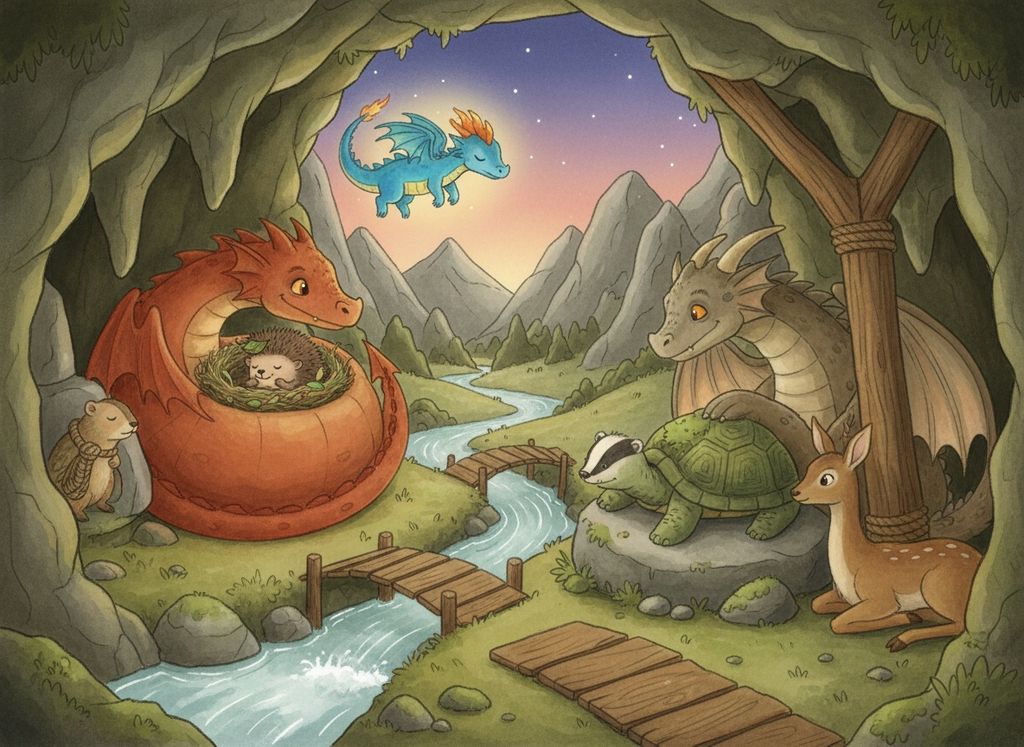
Thistle sighed. It was not a small, sad sigh.
It was a sleeping sigh.
Ember stayed very, very still.
In the morning, Thistle opened her eyes.
“You are still here,” she said. Her voice was scratchy, but it was her voice.
“Yes,” said Ember.
“Sitting in my warren all night like a large, lumpy stone?”
“Yes,” said Ember.
Thistle looked at him for a long moment. Her little nose twitched.
“That was not bad,” she said. “For a dragon.”
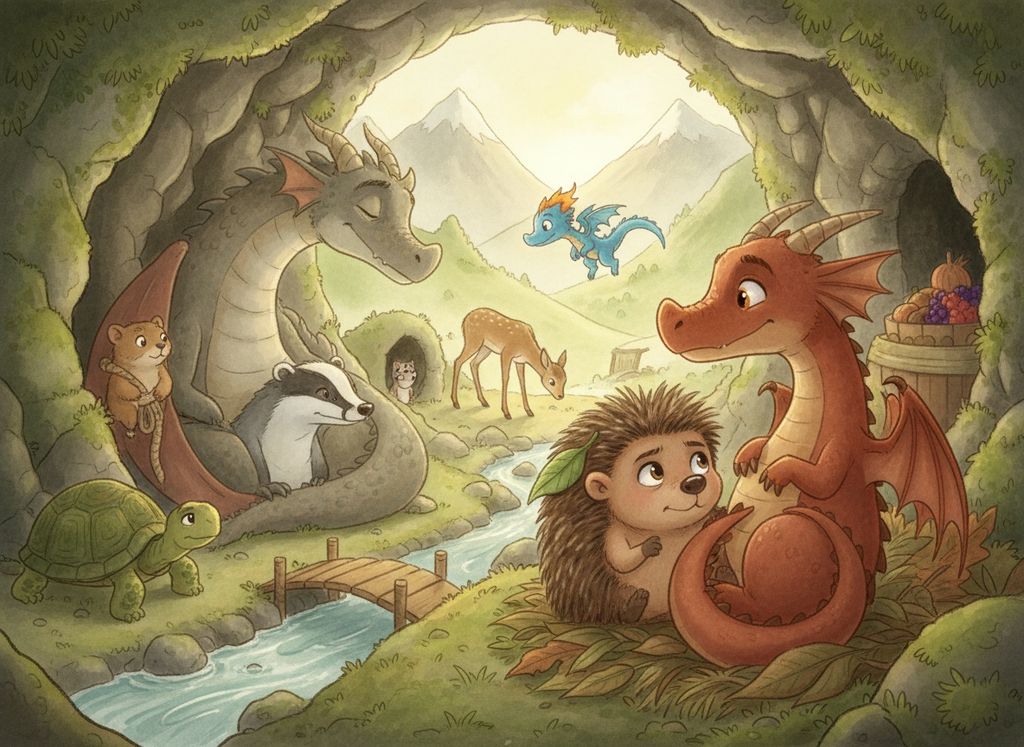
And Ember smiled, because it was the best thing she could have said. There was no puzzle. There was no clever solution. There was just soup, which Ember made badly, with river water and riverweed, and Thistle ate it anyway, and there was sitting, and there was staying.
And it worked.